
Forex Trading Guide for South African Traders
💱 Learn forex trading basics, trades, risks & benefits, tailored tips for South African traders. Explore strategies, market insights & regulations today!
Edited By
Isabella Thornton
Forex trading offers South African traders an accessible way to participate in the global currency markets. Unlike trading shares on the JSE, forex deals mainly in currency pairs like USD/ZAR or EUR/USD, where you speculate on the exchange rate movements. The market operates 24/5, allowing you to trade during local hours and around the clock worldwide.
Understanding the basics is vital before diving in. Unlike a cassava patch where you wait for crops to grow, forex trading demands constant attention to market moves, economic news, and geopolitical events that can sway currency values. For instance, changes in the US Federal Reserve's interest rates or fluctuations in Eskom's performance can impact the rand’s strength.
Forex trading isn't a ticket to overnight riches—consistent research, solid strategies, and risk control separate successful traders from the rest.
Choosing the right broker is a key step, especially for South Africans who must consider platforms regulated by the Financial Sector Conduct Authority (FSCA). FSCA-regulated brokers typically offer safer trading environments, better client protection, and clearer recourse options if things go wrong. Examples include local options like IG South Africa, and global brokers such as XM or FXTM that accept South African clients.
Effective trading strategies vary from day trading to swing trading or position trading, each suiting different styles and time commitments. Most successful traders incorporate indicators like moving averages, Relative Strength Index (RSI), or economic calendars emphasising South African and global events.
Managing risk is non-negotiable. Setting stop-loss orders, limiting exposure to a small percentage of your trading capital per trade, and avoiding trading solely on hunches help preserve your funds.
This article walks you through practical tips specific to South Africa’s financial landscape, discusses brokers suited to local traders, explores proven trading methods, and offers straightforward advice on safeguarding your investment. Whether you’re a seasoned analyst or new to the forex scene, these insights will help you make informed choices in a market known for its volatility and opportunity.
Getting a grip on the basics of forex trading sets a strong foundation for success in this fast-moving market. By understanding the key concepts, South African traders can make smarter decisions, manage risks better, and avoid common pitfalls.
Forex trading involves buying and selling currencies on a global market. It's the largest financial market worldwide, where banks, corporations, governments, and individual traders exchange currencies for purposes like trade, investment, and speculation. For instance, when a South African investor suspects the US dollar will strengthen against the rand, they might buy USD/ZAR currency pairs hoping to profit from that move.
There are various participants including central banks, commercial banks, brokers, and retail traders. Each has different goals but collectively contribute to liquidity and price discovery.
Currencies always trade in pairs — one currency is bought while the other is sold. Take EUR/USD, for example. If you buy this pair, you are essentially buying euros and selling US dollars. The price indicates how many US dollars you need to purchase one euro.
Understanding the base and quote currencies is vital because price movements affect your position differently depending on the direction you take. South African traders commonly trade USD/ZAR, EUR/ZAR, and GBP/ZAR pairs, influenced by both local and global events.
The forex market operates 24 hours a day during weekdays, split across major centres like London, New York, Tokyo, and Sydney. This continuous cycle means opportunities to trade exist almost anytime.
Liquidity—the ease of buying or selling—is highest during overlapping market sessions, such as London/New York. For traders in SA, liquidity peaks when London opens at 9 am SAST, making it an ideal trading window for tighter spreads and less slippage.
A pip is the smallest price movement in a currency pair, usually 0.0001 for most pairs. For example, if USD/ZAR moves from 18.5000 to 18.5005, that's half a pip. Lots represent the trade size; a standard lot equals 100,000 units of the base currency, but many brokers offer mini and micro lots for smaller trades.
Leverage lets you control a large position with a small amount of capital. A 100:1 leverage means you could trade R100,000 with just R1,000. This magnifies profits and losses, so managing leverage wisely is essential.
The bid price is what buyers are willing to pay; the ask price is what sellers want. The difference between these two is the spread.
When you enter a trade, you buy at the ask and sell at the bid. For example, if the USD/ZAR bid is 18.4500 and the ask is 18.4550, you'll pay slightly more than the bid price to enter.
The spread is basically the cost of trading and varies between brokers and pairs. Tighter spreads are preferable as they reduce trading costs. For liquid pairs like USD/ZAR, spreads are usually smaller, while exotic pairs might carry wider spreads.
Margin is the security deposit to open a position, tied closely to leverage. If you trade with R10,000 margin at 50:1 leverage, you control R500,000 in currency. However, if the trade moves against you, your broker may issue a margin call requesting additional funds.
Knowing these foundational elements is not just about jargon — it equips South African traders to navigate the forex market effectively, manage risks, and spot real opportunities when they appear.
Understanding forex basics will help you avoid getting caught out by unexpected market moves or confusing broker terms. Make sure to get comfortable with these terms before you commit real money to trading.
Choosing the right forex broker is a critical step for South African traders aiming to succeed in the currency markets. Your broker acts as the bridge between you and the complex world of forex trading. Beyond just providing access to trading platforms, brokers influence your ability to execute trades efficiently, access reliable market data, and manage risks properly. Considering South Africa’s specific regulatory framework and economic environment, selecting a broker with solid credentials and fitting features can make a significant difference.
The Financial Sector Conduct Authority (FSCA) is the primary watchdog overseeing financial services in South Africa, including forex brokers. Its job is to protect investors by enforcing regulations and ensuring that brokers operate fairly and transparently. For South African traders, choosing a broker regulated by the FSCA means that the broker must comply with local laws tailored to safeguard trader interests, such as adequately segregating client funds and following strict reporting protocols.
To confirm a broker’s legitimacy, traders should check the FSCA’s public register for licensed entities. This straightforward step can prevent falling victim to unregistered brokers who might operate without oversight. Moreover, it pays to research the broker’s history – look into how long they have been in business and read other traders’ reviews. For instance, brokers like IG and Plus500 are well-known and FSCA-registered, offering South African users confidence backed by regulation.
Regulation isn’t a tick-box exercise; it directly impacts the safety of your capital. Regulated brokers face routine audits that reduce the risk of fraud or malpractice. Without FSCA oversight, brokers may operate from offshore jurisdictions with limited recourse if disputes arise. For example, unregulated brokers might delay withdrawals or manipulate pricing, scenarios you want to avoid at all costs. Therefore, prioritising regulation supports a safer trading environment.
A broker’s trading platform is your main tool, so it must be reliable and user-friendly. Popular platforms like MetaTrader 4 (MT4) or MetaTrader 5 (MT5) are standard because they offer comprehensive charting, technical indicators, and fast execution. Some brokers also utilise cTrader or provide bespoke platforms optimised for mobile devices. For South Africans frequently on the go, a smooth mobile experience can be a deciding factor.
Trading isn’t free, and costs directly affect your profitability. Brokers typically charge through spreads—the difference between buy and sell prices—or commissions per trade. Low spreads on major pairs like EUR/USD are common with leading brokers, but watch out for hidden fees such as inactivity charges or withdrawal costs. For example, a broker may advertise zero commissions but widen spreads, making it more expensive for regular traders. Understanding these nuances helps keep costs manageable.
Good customer support matters, especially when trading involves real money. Look for brokers that offer prompt and accessible support through multiple channels, including live chat, phone, and email. South African traders appreciate having help available during local business hours. Additionally, brokers that provide educational resources like tutorials, webinars, and market analysis empower you to improve your trading skills. These extras turn a broker from a mere service provider into a trading partner.
Always remember: a well-regulated broker combined with a platform that suits your style and reliable support structures forms the backbone of a successful forex trading experience in South Africa.
Mastering a solid trading strategy is the backbone to success in forex, especially for South African traders who deal with unique market dynamics and global shifts. A robust approach helps you manage risks, spot opportunities early, and make measured decisions rather than relying on guesswork or hearsay.
Charts offer a visual snapshot of currency price movements over various timeframes, helping traders spot patterns and potential entry or exit points. Popular indicators like Moving Averages smooth out price fluctuations to highlight trends, while the Relative Strength Index (RSI) warns when a currency might be overbought or oversold. For instance, a South African rand chart showing a persistent upward Moving Average might suggest strengthening against the US dollar, signalling a potential buy.
Identifying whether the market is trending up, down, or moving sideways is vital for timing trades. Patterns such as 'head and shoulders' or 'double bottoms' point to likely reversals, while trendlines help confirm the direction. If the ZAR/USD pair breaks a key support line, traders might expect further declines. This hands-on approach allows South African traders to adjust swiftly to shifts influenced by local or global events.
Economic releases, like South Africa's quarterly GDP figures or interest rate decisions from the South African Reserve Bank (SARB), directly impact currency value. For example, an unexpected hike in the repo rate usually strengthens the rand, drawing in forex traders seeking higher returns. Keeping a keen eye on these events assists you to anticipate volatility rather than being caught off guard.
While local data matters, global forces also sway currencies. For South Africans, US economic health, commodity prices (like gold and platinum), and geopolitical events can drive significant fluctuations. For example, when gold prices rise, the rand often gains as South Africa is a major gold producer. Recognising such links helps you contextualise market moves beyond national borders.
Day trading involves buying and selling within short spans—minutes to hours—seizing small profits from market swings. Conversely, swing trading holds positions over days or weeks, aiming to capture broader trends. South African traders active during local market hours might prefer swing trading to avoid overnight risk during times of high loadshedding uncertainty, while urban traders with stable power may try day trading for faster gains.
These orders act as safety valves, automatically closing trades at predetermined price points. Stop-loss cuts potential losses by exiting a trade if the market moves unfavourably, while a take-profit locks in gains when targets are met. Setting these correctly is crucial—too tight, and you may be stopped out prematurely; too loose, and you risk heavy losses. For example, placing a stop-loss slightly below a recent support level on the rand/USD can preserve capital against sudden drops.
Effective trading strategies combine sound analysis with disciplined risk controls, especially for South African traders facing both local conditions like loadshedding and global market volatility. Being methodical rather than emotional keeps you in the game for longer and increases your chances of consistent profit.
When trading forex, managing risk isn’t just a neat-to-have — it’s essential to preserve your capital and stay in the game long term. The forex market’s fast-moving and can be quite volatile, so if you’re not careful, losses can pile up quickly. This section highlights practical ways to manage those risks, tailored for South African traders who face an added layer of currency fluctuations and local economic quirks.
Leverage lets you control a bigger trade than your actual capital. While this can magnify profits, it also sharply increases potential losses. For example, with 100:1 leverage, a R1,000 investment lets you trade as if you had R100,000. But if the market moves against you by 1%, you risk losing your entire R1,000 plus extra if your broker doesn’t automatically close your position.
A margin call occurs when your losses eat into your deposited margin, prompting the broker to ask for more funds or close your trades. This can be brutal for traders who don’t monitor their positions closely. It’s why many South African traders prefer modest leverage levels – say, 10:1 or 20:1 – rather than going all out. Better a smaller leverage and less risk than being wiped out in one wild move.
Forex markets can swing wildly, often triggered by global events or local economic news – for example, a sudden change in SARB’s repo rate or political unrest. Volatility means unpredictable price shifts, which can either give great opportunities or lead to sudden losses.
In practical terms, volatility requires you to stay alert and adjust your strategy. During Eskom load-shedding stages or when data releases are due, the rand can behave unexpectedly. Planning trades around these events or reducing exposure during high volatility times often helps avoid heavy losses.
Deciding how big each trade should be is fundamental. It’s best not to gamble with too much of your capital on any single trade. A common approach is to risk only 1–2% of your total trading capital on each position. So, with R50,000 in your account, aim to risk no more than R500 to R1,000 per trade.
Adjust your position size depending on how volatile the currency pair is. For instance, because the ZAR/USD pair can fluctuate more than EUR/USD, you might choose smaller positions when trading the rand pair. This keeps your overall risk steady.
Putting all your eggs in one basket can be dangerous. Spread your trades across different currency pairs or strategies to minimise the impact of any single setback. For example, combining trades in USD/ZAR with EUR/USD or GBP/USD can balance out risks, as these pairs often react differently to news.
Diversification also means avoiding overexposure to the rand alone, especially if you’re concerned about local developments. Mixing in more stable pairs can help shield your portfolio when the rand is under pressure.
A stop-loss order is your friend in cutting potential losses automatically once a trade moves unfavourably beyond a set level. Setting these orders guards your capital without the need to watch the market constantly.
Effective stop-loss placement means not setting it too tight – which might close trades prematurely due to normal market noise – nor too wide, which risks bigger losses than you can afford. For instance, if the typical daily range for USD/ZAR is about 100 pips, setting a stop-loss at 30–50 pips could provide a reasonable cushion while protecting the trade from major swings.
Managing risks well means you can trade with confidence and keep your capital safe, even when markets go sideways. Keep these practical techniques in mind, especially as a South African trader dealing with rand volatility and global market shifts.
By understanding how leverage and volatility work, and by applying techniques like careful position sizing, diversification, and smart stop-loss orders, you’ll protect your forex investments and increase your chances of lasting success.
Choosing the right tools and resources is key to success in forex trading, especially for South African traders who navigate a unique economic and regulatory environment. Well-equipped platforms, timely market news, and continuous education help you make informed decisions and manage risks effectively.
MetaTrader 4 and MetaTrader 5 remain popular choices due to their user-friendly interface, a wide range of technical indicators, and automated trading capabilities via Expert Advisors (EAs). South African traders appreciate that brokers regulated by the FSCA often offer these platforms with access to major and minor currency pairs. cTrader, meanwhile, offers a sleek design with advanced charting features and level II pricing, which provides greater market depth visibility. Both platforms support demo accounts, allowing you to practise your strategies without risking real money.
With South Africa's growing mobile connectivity, many traders prefer managing their positions on the go using mobile apps from MetaTrader, cTrader, or broker-specific apps like those from IG or Plus500. These mobile platforms give you access to live rates, notifications on market movements, and the ability to execute trades anywhere, even during load-shedding-induced power cuts, provided your mobile data keeps you online. The convenience of mobile trading apps means you can react quickly to sudden market shifts, which matters a lot in volatile forex markets.
Staying updated with global and local market news is essential. South African forex traders often use resources like MyBroadband, BusinessTech, and international services such as Investing.com or Reuters. These platforms offer news on economic data releases, political developments, and events that directly impact currency pairs like the USD/ZAR. Timely news helps you anticipate market reactions and adjust your trades accordingly.
Continuous learning is a must in forex. Many brokers and independent educators offer free or paid training materials, ranging from beginner guides to advanced technical analysis courses. Webinars tailored for South African traders, often hosted by local experts, focus on topics like managing trades amid Eskom's loadshedding or understanding SARB monetary policy effects on the rand. These sessions provide practical insights and foster community interaction, which can sharpen your skills and build confidence.
Reliable platforms and updated information form the backbone of effective forex trading. Access to the right tools and training ensures you stay ahead in South Africa's fast-paced currency markets.
By selecting platforms that suit your trading style, keeping abreast of market news, and investing time in education, you'll be well-equipped to navigate the forex space smartly and securely.
💱 Learn forex trading basics, trades, risks & benefits, tailored tips for South African traders. Explore strategies, market insights & regulations today!
Explore forex trading software in South Africa 🇿🇦: types, key features, benefits, and tips for matching platforms with your strategy and risk needs.

📊 Discover how forex trading seminars in South Africa can boost your skills! Learn to pick the right one, what to expect, and apply knowledge practically. 🇿🇦
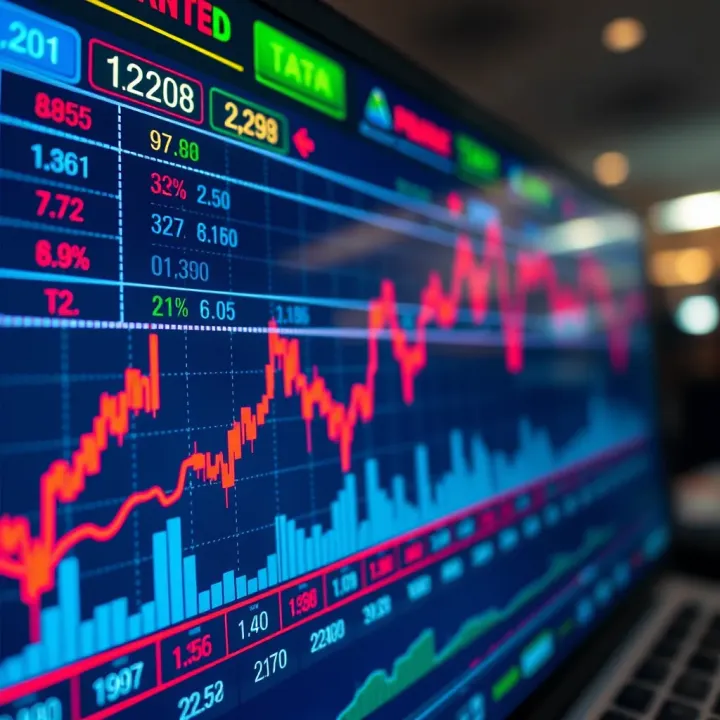
📉 New to forex trading in South Africa? Learn key basics, market tips, broker advice, and risk management to start your trading journey confidently today! 🇿🇦
Based on 12 reviews