
Forex Trading Basics: A Clear Guide
📈 Learn the fundamentals of forex trading with this in-depth guide covering market operations, key concepts, strategies, risk management, and essential tools.
Edited By
Sophie Reynolds
Forex trading stands out as a major financial market where currencies are exchanged around the clock. It’s not just a playground for banks and multinational firms; individual traders here in South Africa—as elsewhere—can participate and potentially profit if they understand the nuts and bolts.
Trading forex means buying one currency while selling another, so all deals happen in pairs. For example, if you believe the US dollar will strengthen against the South African rand, you’d buy USD/ZAR. Should the dollar rise, your position yields a profit; if it drops, you absorb a loss. Simple as that, yet the market’s movements can be swift and complex.
Getting a grip on the key terms and mechanisms early on saves time and losses down the road.
Pip: The smallest price movement in a currency pair, often 0.0001 but varies with the pair.
Leverage: Trading with borrowed funds to increase exposure, common ratios range from 10:1 to 100:1 in retail platforms. While it can magnify gains, it also swells losses.
Spread: The difference between the buying (ask) and selling (bid) price, which is effectively the cost of opening a trade.
Margin: The amount of your own money needed to open a position when leverage is applied.
Most South African traders use platforms like MetaTrader 4 and 5 or broker-specific software offering charting, order execution, and analysis. Choosing a platform that fits your style and provides access to live pricing and robust support is essential.
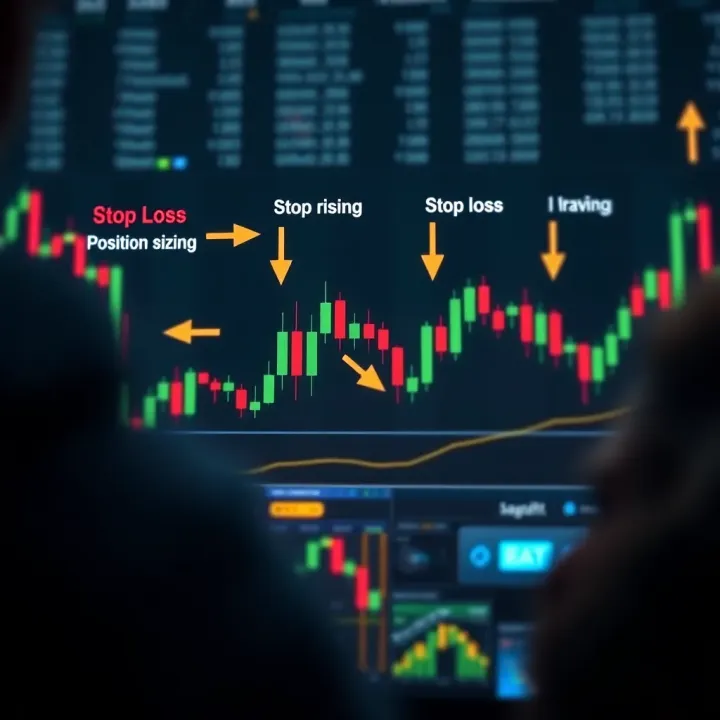
A straightforward rule is never to risk more than 1-2% of your trading capital on a single trade. Using stop-loss orders prevents catastrophic drops from unexpected moves. Without a clear risk plan, the market can erode your account faster than you can blink.
Define your trading goals (daily income, long-term growth)
Decide how much capital to commit
Choose currency pairs you understand well
Set clear entry and exit rules
Keep a trading journal to track your decisions and outcomes
By breaking down forex trading into manageable parts and applying practical strategies, beginners can avoid common traps and develop steady confidence. Ready to start building your trading journey? Keep your eyes on the fundamentals here, and the rest will follow.
Grasping the basics of forex trading is the first step for anyone keen to navigate the fast-moving currency markets confidently. It sets the foundation for understanding how global currencies interact and how traders can profit or minimise risks by buying and selling these currencies. For South African traders, especially, knowing the basics helps make sense of local factors like the rand's performance against major currencies such as the US dollar or euro, which impact imports, exports, and even everyday expenses.
Forex trading involves buying one currency while simultaneously selling another. This simultaneous exchange makes up currency pairs, and the goal is to benefit from fluctuations in exchange rates. Unlike the stock market, forex operates without a central exchange, trading on a global, decentralised network.
Practically speaking, a beginner stepping into forex is essentially guessing whether a currency will strengthen or weaken against another. For example, if a South African trader believes the rand will weaken against the US dollar, they may sell the ZAR/USD pair, hoping to buy back at a lower rate later and pocket the difference.
Currencies are traded all around the world through banks, corporations, brokers, and retail traders. This global network allows for continuous trading across different time zones, which means forex never truly sleeps – an advantage that offers flexibility, especially if you prefer trading outside typical office hours.
Major currency pairs form the backbone of forex trading. These include pairs like EUR/USD, GBP/USD, USD/JPY, and USD/ZAR. Each pair pairs a major currency with another, often including the US dollar which is considered the world’s reserve currency. The liquidity and volatility of these pairs tend to be higher, giving traders clearer price movements and relatively tighter spreads, which reduces trading costs.
The trading sessions align with the business hours of major financial centres: London, New York, Tokyo, and Sydney. For instance, the London session (GMT 7 am to 4 pm) is critical for the rand since South African markets run close to this timing. Understanding these overlaps is key to spotting high-activity windows when price movements can be more significant.
Liquidity—the ease with which currencies can be bought or sold without affecting their price—plays a big role in the market. High liquidity generally means better prices and less slippage, which is especially important when opening or closing large positions. Volume ties into liquidity: during peak trading hours, volumes surge, offering more opportunities but also higher competition among traders.
Forex trading is about moving with the market's rhythm: knowing when it’s busy and when it’s quiet, which pairs to watch, and how global events sway currency flows.
By building a solid understanding of these basics, traders can better time their entries and exits and manage the inherent risks tied to this 24-hour market.
Grasping the key terminology and concepts is the first step for anyone serious about forex trading. Without understanding terms like pips, leverage, and margin, you'll be navigating the market blind, increasing the risk of costly mistakes. Getting comfortable with these basics helps you interpret price quotes, manage your exposure, and make informed decisions based on market movements.
In forex trading, currencies are quoted in pairs, like USD/ZAR. Each quote shows a bid price and an ask price. The bid price is the amount the market will pay for the base currency (first in the pair), while the ask price is what you’d pay to buy it. The difference between these two is called the spread, which is effectively a cost you pay to enter a trade.
For example, if USD/ZAR is quoted at 18.50/18.52, you can sell USD at 18.50 ZAR or buy it at 18.52 ZAR. Knowing bid and ask prices lets you spot good entry and exit points, and helps you understand what you’ll pay in spreads.
A pip represents the smallest price move a currency pair can make based on market convention, usually the fourth decimal place. It’s essential for measuring profits or losses. For USD/ZAR, which trades with two decimal places, a pip is typically 0.01 ZAR. To calculate pip value, multiply the pip size by your position size. So, if you trade 1,000 USD and the pip is 0.01 ZAR, each pip move equals R10 change (1,000 x 0.01).
Leverage allows you to control a much larger position with a smaller amount of your own money. For instance, 1:100 leverage lets you trade R100,000 worth of currency by putting down just R1,000. That said, while leverage can magnify your profits, it equally magnifies losses, so it’s a double-edged sword. Using too much leverage without discipline can wipe out your account quickly.
Margin is the deposit needed to open or maintain a leveraged position. Think of it as a security bond. If you have R10,000 with 1:50 leverage, you can open a position up to R500,000. However, if your losses eat into your margin, you’ll get a margin call from your broker requiring you to top up or close positions. Knowing your margin requirements helps you manage risk and avoid getting pulled out of trades prematurely.
Forex trades come in different lot sizes, which dictate the volume you’re trading:
Standard lot: 100,000 units of the base currency
Mini lot: 10,000 units
Micro lot: 1,000 units
Choosing lot sizes that fit your risk appetite and capital is vital. Beginners often start with micro lots to limit losses while learning the ropes. For example, 1 micro lot on USD/ZAR with a pip value of 0.01 means each pip moves R10, manageable for most new traders.
Understanding these terms isn't just academic – they’re keys to making smart trades and staying afloat in the forex market.
Selecting the right tools and platforms is a key step for anyone starting with forex trading. These elements shape your trading experience, impacting your ability to analyse the market, execute trades, and manage risks efficiently. In South Africa, where internet connectivity and regulations play a role, using reliable and accessible platforms matters even more.
South African traders must look out for brokers regulated by the Financial Sector Conduct Authority (FSCA). FSCA regulation means the broker follows local rules designed to protect investors, including how client funds are managed and the transparency of trading conditions. Trading through an unregulated broker can pose risks such as unfair practices or difficulty withdrawing money.
Many international brokers accept South African clients, but ensure they comply with FSCA standards or are licensed by a recognised body. This adds a layer of security and keeps your trading within legal bounds.
Brokers earn through commissions or spreads — the difference between a currency pair’s buy (ask) and sell (bid) price. Some brokers charge no direct commissions, making their profits from wider spreads, while others keep spreads tight but charge a commission per trade. For beginners, tight spreads are critical as they reduce the cost of opening and closing trades.
For example, a typical spread on the EUR/USD pair might be 1.0 pip with one broker, but 0.5 pips plus a small commission with another. Understanding these costs upfront helps you pick a broker that suits your trading style and budget.
MetaTrader 4 (MT4) and MetaTrader 5 (MT5) have become almost industry standards, especially for beginners and intermediate traders. They offer user-friendly interfaces with advanced charting, custom indicators, and automated trading through Expert Advisors (EAs). MT4 is widely used due to its simplicity and wide broker support, while MT5 adds features like more timeframes and order types.
Using these platforms allows you to analyse currency pairs in detail, test strategies, and execute trades quickly. For South African traders, MT4 and MT5 are supported by many FSCA-regulated brokers, ensuring accessibility.
Mobile apps bring trading flexibility, letting you monitor markets and place trades anywhere with your smartphone. Both MT4 and MT5 have mobile versions available for Android and iOS, offering most desktop functionalities.
Besides MetaTrader, brokers often provide proprietary apps tailored for their services — these may include features like instant news feeds, direct chat support, or easy fund deposits. For traders coping with daily commutes or loadshedding interruptions, mobile apps ensure no trading opportunity is missed.
Effective charting tools are vital to understand market trends and timing trades. Most platforms come with basic chart types and indicators, but many traders turn to dedicated analytical software or websites for deeper insights.
For example, TradingView provides a free, web-based charting service with advanced drawing tools and social features to share ideas. South African traders also benefit from economic calendars integrated into platforms, showing events like SARB interest rate decisions or US Federal Reserve meetings that affect currency volatility.
Choosing the right broker and platform isn't just about features — it affects your confidence and ability to trade consistently. Start by ensuring regulation, understand your cost structure, and pick tools that fit your routine and strategy.
Managing risk is the backbone of successful forex trading, especially for beginners. The market can be unforgiving, and without proper controls, losses can pile up quickly. Protecting your capital means using strategies that safeguard your investment so you can stay in the game longer and seize profitable opportunities as they arise. In South Africa, where many traders start out with limited funds, managing risk effectively is essential to avoid blowing up your account early on.
Setting stop-loss and take-profit levels helps you decide in advance the maximum loss you're willing to accept and the profit point at which you want to close a trade. For instance, if you enter a trade on the USD/ZAR pair at R15.00 with a stop-loss at R14.90, your loss is capped at 10 cents per unit if the market moves against you. This automatic exit protects your money without needing constant monitoring. Similarly, setting a take-profit ensures you lock in gains when the price hits your target, preventing greed from wiping out profits in volatile moments.
Position sizing strategies determine how much you trade based on your trading capital and risk tolerance. Say you only want to risk 2% of your R10,000 trading account on any single trade; that means your maximum loss should not exceed R200. If your stop-loss distance is 0.01 in the currency price, you calculate the lot size so that losing 0.01 equals R200 in your account. This keeps your risk level consistent and manageable, preventing a few bad trades from wiping you out.
Avoiding overtrading means resisting the urge to jump into multiple trades without a solid plan. Overtrading often happens when emotions like boredom or impatience take over, leading to reckless decisions and higher transaction costs. For example, if you find yourself opening trades every time the market moves slightly, your profits can be eaten up by spreads and slippage. Sticking to fewer, well-considered trades improves focus and helps keep your risk in check.
Controlling emotions and sticking to discipline is crucial since fear and greed can easily cloud judgement. Discipline means following your trading plan, including your risk limits and entry/exit rules, even when tempted to stray. Imagine you spot a ‘‘sure thing’’ but it doesn't quite fit your strategy; letting emotion dictate a trade puts your capital at unnecessary risk. Traders who master emotional control tend to make steadier, more logical decisions.
Dealing with losses and setbacks is part and parcel of trading. No one wins every time, so accepting losses without panic is important. For instance, after a losing trade, instead of chasing a quick compensation trade, take a moment to analyse what went wrong and adjust your approach. This mindset keeps you from falling into downward spirals and protects your capital over time.
Careful risk management combined with mental discipline may not guarantee profits, but they limit losses and increase your chances of long-term success in forex trading.
By focusing on these practical risk control methods and cultivating a steady mindset, you build a strong foundation to grow your forex trading skills sustainably. It’s not about avoiding losses completely, but managing them well enough to stay in the game.
Creating a forex trading plan is a fundamental step for anyone serious about making consistent gains in the forex market. Unlike casual speculation, trading without a plan often leads to haphazard decisions and emotional reactions that erode capital quickly. A well-thought-out plan acts like a roadmap, outlining clear rules for entries, exits, risk management, and evaluation. This structure prevents knee-jerk reactions during market swings and helps traders stick to disciplined actions over time.
Short-term vs. long-term trading: When setting goals, you first need to decide your trading horizon. Short-term trading, like day trading or scalping, relies on capturing quick moves within hours or minutes. It demands intense focus and can be stressful due to the fast pace. On the flip side, long-term trading usually spans weeks or months and requires patience, allowing positions to ride out market fluctuations. For instance, a trader in Johannesburg might choose longer-term strategies to avoid the stress of watching the market all day while juggling other commitments.
Choosing a timeframe aligns your strategy with your lifestyle and temperament. If you’re working a full-time job, long-term trading or swing trading can be more manageable. Short-term approaches require near-constant monitoring, which isn't feasible for everyone.
Realistic expectations for returns: New traders often expect to double their account overnight. This mindset sets them up for disappointment and risky behaviour. In reality, consistent monthly returns of 2-5% are quite good, especially after deducting costs like spreads and commissions. Expecting modest, steady growth rather than quick riches builds mental resilience.
Successful traders understand that losses are part of the game and that capital preservation is key. For example, a beginner with R10,000 shouldn’t plan to make R5,000 monthly right off the bat. Instead, focusing on learning and steady progress can prevent reckless risks that wipe an account in no time.
Using demo accounts to build confidence: Starting on a demo account is a no-brainer. It allows you to test strategies and familiarise yourself with platforms without risking a cent. For beginners trading through local brokers like IG or Standard Bank FX, a demo account replicates real market conditions, helping you get comfortable with order types, charts, and execution. This stage builds confidence and identifies strengths and weaknesses in your approach.
Evaluating strategies before risking real money: Backtesting means running your strategy on past market data to see how it would have performed. While past results don’t guarantee future success, backtesting highlights strategy strengths and flaws. For example, you might find a moving average crossover system works well in trending markets but fails during sideways phases. Testing on historical data followed by demo trading refines your plan and reduces guesswork.
Remember, it’s better to lose virtual money learning than real money making hasty mistakes. Take the time to evaluate your methods thoroughly before committing capital.
Ultimately, a clear plan grounded in realistic goals and rigorous testing increases your chances of becoming a competent trader. Take it one step at a time, and avoid shortcuts that cost you in the long haul.
📈 Learn the fundamentals of forex trading with this in-depth guide covering market operations, key concepts, strategies, risk management, and essential tools.
📊 Explore key Forex trading tips 🇿🇦 tailored for South African traders. Learn market basics, risk control, and tactics for smarter decisions.
📈 Discover essential forex trading tools to boost your strategies in South Africa—from charting software to risk management and reliable broker platforms.
🇿🇦 Discover practical forex trading strategies tailored for South African traders. Learn smart risk management, avoid common mistakes, and trade confidently! 💹
Based on 5 reviews