
Forex Trading Tips for South African Traders
📊 Explore key Forex trading tips 🇿🇦 tailored for South African traders. Learn market basics, risk control, and tactics for smarter decisions.
Edited By
Thomas Graham
Forex trading, at its core, is the buying and selling of currencies. For South African traders, this market offers a chance to engage directly with global financial flows, usually through currency pairs like USD/ZAR, EUR/ZAR, or GBP/USD. The foreign exchange market operates 24 hours a day, five days a week, which means understanding local timing relative to global sessions (London, New York, Tokyo) can make or break your trading outcomes.
South African traders must familiarise themselves with the basics before diving in. When you buy a currency pair, you’re actually purchasing the first currency (the base) and selling the second (the quote). For example, if you buy USD/ZAR at 18.00, you’re betting that the rand will weaken against the dollar, so it takes more rands to buy one dollar.
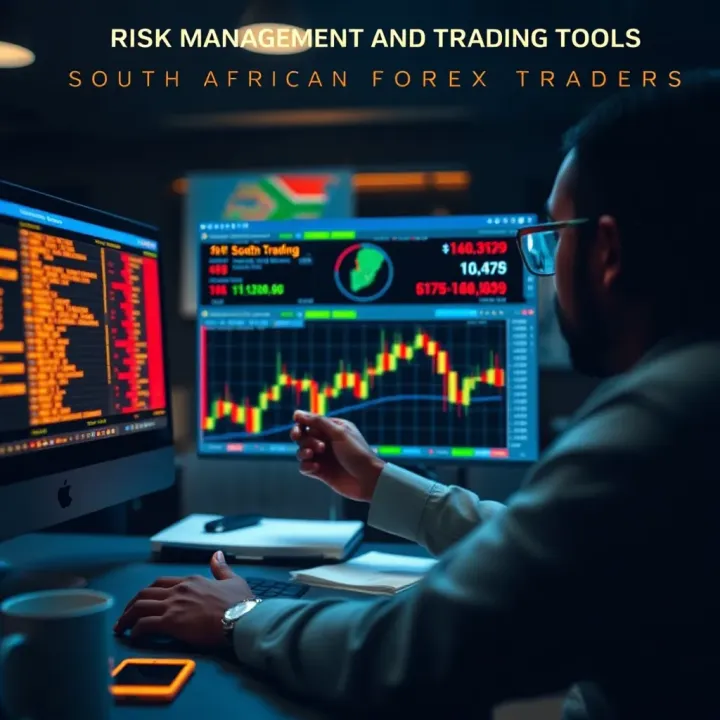
Trading forex requires discipline and a solid grasp of risk management; it’s not about gambling but informed decision-making.
Below are key points to keep in mind as you start:
Market Hours: The forex market opens in Asia, moves to Europe, then shifts to the US session. For South Africans, the London session usually kicks off in the afternoon, which coincides with more volatility in ZAR pairs.
Leverage and Margins: While brokers often offer high leverage (sometimes up to 1:500), it’s wise to be cautious as South African traders can quickly face large losses if they don’t manage their positions carefully.
Local Regulations: Your forex broker should be registered with the Financial Sector Conduct Authority (FSCA) to avoid scams. Many international brokers service South Africans, but it pays to verify their legitimacy and conditions.
Trading Platforms: MT4 and MT5 remain popular, but some traders prefer platforms like cTrader or even local brokerage apps focused on the South African market.
Risk Management: Use stop-loss orders to limit potential losses. Leverage exposure is best kept within your risk tolerance — usually no more than 2% of your account per trade.
These fundamentals form the solid base South African traders need. Next steps involve strategy building, technical analysis, and understanding economic indicators that impact forex prices globally and locally.
Grasping how the forex market works is essential for anyone wanting to trade currencies effectively in South Africa. The forex market is a massive, global arena where currencies are bought and sold every day, determining exchange rates we use for everything from imports, exports, to travel money. Knowing this market helps traders anticipate currency movements and manage risk.
Forex trading involves exchanging one currency for another, reflecting their relative value at that moment. It works because countries and businesses need foreign currencies for trade or investment; for example, a South African importer buying machinery from Germany will need euros, which they get by selling rands. This buying and selling sets the currency rates.
Forex stands out for its vast size and nonstop nature—trading occurs 24 hours during weekdays, unlike stock markets that close overnight. There's no single location for forex; it operates over-the-counter via a network of banks and brokers globally. For South African traders, this means they can trade at odd hours, but must also consider time zones and liquidity in different sessions.
Forex trades come in pairs: one currency is exchanged for another, like USD/ZAR. Pairs divide into majors (like EUR/USD), minors, and exotic pairs, often involving emerging market currencies like the rand. Majors generally have tighter spreads and more liquidity. For instance, trading USD/ZAR is popular locally because it reflects South Africa's economic ties with the US.
A pip is the smallest unit of price movement, typically 0.0001 for most currencies, helping traders measure gains or losses precisely. A lot represents the trade size — a standard lot equals 100,000 units of the base currency. Leverage allows you to control larger positions with smaller capital but also amplifies risk. If you trade USD/ZAR with 100:1 leverage, a R10,000 investment controls R1 million worth of currency, a double-edged sword that must be handled carefully.
It's not just individual traders; banks, hedge funds, corporations, and central banks like the South African Reserve Bank all play their part. For example, SARB might intervene to stabilise the rand, which impacts market movements. Understanding these players helps traders anticipate moves based on economic or policy changes.
The forex market divides into major sessions: Asia, Europe, and North America, each with peak activity. South African traders mostly operate during the European and American sessions, coinciding with their daytime. The London session is particularly important due to its overlap with Johannesburg hours, bringing higher liquidity and volatility – this is when many trading opportunities arise.
A solid knowledge of these market aspects lets traders make informed decisions and avoid common pitfalls, especially in a market that never truly sleeps.
Understanding these basics will put you in a stronger position to navigate forex trading with confidence and adapt to changing market conditions relevant to South Africa.
Mastering basic forex trading strategies forms the backbone of successful trading, especially in South Africa where local economic factors and global influences merge uniquely. These strategies help traders make sense of currency fluctuations and plan trades with a clearer understanding of risks and opportunities. Effective strategies combine both fundamental and technical analysis to offer a balanced view.
Fundamental analysis looks at economic data to predict currency movements. Key indicators include interest rates, inflation figures, employment stats, and GDP growth from major economies like the US, EU, and China. For instance, a rise in the US Federal Reserve’s interest rates often strengthens the US dollar, affecting the rand-to-dollar rate. Traders watching these indicators can anticipate shifts before they fully appear in price charts.
The South African Reserve Bank's (SARB) decisions on interest rates and inflation targeting strongly influence the rand’s value. If SARB hikes rates to curb inflation, the rand may strengthen as higher yields attract foreign investors. Conversely, rate cuts could weaken the rand, prompting traders to adjust forex positions accordingly. Awareness of SARB’s stance during local economic reports is invaluable for timing trades.
Technical analysis involves studying price charts to identify patterns and predict future movements. Common tools include moving averages that smooth out price data to reveal trends, and the Relative Strength Index (RSI), which signals overbought or oversold markets. For example, when the 50-day moving average crosses above the 200-day moving average, it may indicate a bullish trend. South African traders often use MetaTrader for these charting techniques.
Price action looks at the actual movement of price without relying heavily on indicators. Support levels are prices where a currency tends to stop falling and bounce back, while resistance levels cap upward moves. Identifying these points gives traders practical spots to enter or exit trades. For example, if the USD/ZAR repeatedly bounces off R15.00, South African traders might set buy orders near that support.
Relying solely on one approach can miss key market cues. Combining fundamental analysis, like SARB policy shifts, with technical signals, such as a break above resistance, provides a more complete picture. For instance, if SARB signals a rate hike and the price chart confirms an upward breakout, it strengthens the case for a long position on the rand.
Timing is everything in forex trading. The market often reacts with short-term volatility or ‘noise’ following news releases. Filtering this noise means waiting for confirmation signals rather than rushing in on the first spike. South African traders should also consider local market hours and overlaps with major forex sessions to avoid erratic moves caused by low liquidity.
Good strategy blends data, price patterns, and smart timing. This approach helps South African traders navigate local nuances and global shifts with steadier confidence.
Trading forex is exciting but risky, especially in volatile markets like South Africa's rand (ZAR). Understanding and managing risk isn't about avoiding it completely but controlling it so your capital lasts. Without solid risk management, even a few poor trades can wipe out your account faster than unexpected loadshedding shuts your power.
Volatility matters because currency prices can swing unexpectedly. For example, the rand often reacts sharply to SARB’s policy changes or shifts in commodity prices. These fluctuations can turn potential gains into losses overnight. Being aware of this means you don’t overcommit to trades during turbulent periods.
Beginner traders often fall into traps like chasing losses or trading without a plan. Overtrading, using excessive leverage, or ignoring market news are common mistakes that worsen losses instead of minimising them. Recognising these pitfalls early can save you from blowing your starter capital.
A stop-loss order is your safety net, automatically selling when the market hits a certain price to limit a loss. Setting it too tight might kick you out of a trade before it recovers, but too loose exposes you to big losses. For instance, if you bought USD/ZAR at 18.50 and expect small fluctuations, a stop-loss could be set at 18.40 to cap losses while giving room to breathe.
Balancing risk and reward means knowing how much you’re willing to lose for a potential gain. Many traders use a 1:2 ratio, risking R500 to make R1,000. This helps avoid trades where the potential reward isn’t worth the gamble, encouraging smarter trade choices.
Position sizing is about how much to risk per trade relative to your total capital. For example, risking 1% of a R10,000 account means you should not lose more than R100 on a single trade. Pair this with leverage control because high leverage magnifies both profits and losses, and poor control could see you wiped out quickly.
Discipline under pressure is key — the market can be stressful, and emotions like fear or greed push traders into rash decisions. Sticking to your plan, using pre-set stop-losses, and keeping a trading journal can help manage these impulses. After all, consistent small wins are better than chasing big losses.
Sound risk management doesn’t guarantee profits but ensures you live to trade another day. Protecting your capital keeps you in the game long enough to find real opportunity.
Managing risk is especially vital for South African traders dealing with fast-moving currencies and local market quirks. Keeping an eye on volatility and practising disciplined money management can help you build a sustainable trading career rather than a one-hit wonder.
Finding the right practical resources and tools is key for any South African trader hoping to make smart moves in the forex market. With the right broker, trading platform, and educational materials, navigating the complexities of forex becomes far more manageable. These resources help you stay updated on market shifts, comply with local regulations, and sharpen your trading skills.
Trading with an FSCA (Financial Sector Conduct Authority) licensed broker in South Africa is critical. The FSCA oversees financial services, including forex brokers, ensuring they meet standards that protect traders against fraud and malpractice. Choosing a regulated broker helps you avoid shady operators and gives you legal recourse if things go sideways.
Several well-known brokers operate locally, including IG, Plus500, and HotForex. These brokers offer tailored services for South Africans, such as ZAR accounts and local payment methods like EFT or SnapScan. Their platforms are usually user-friendly and come with customer support in local time zones, which is handy when you hit a snag during trading.
MetaTrader 4 and 5 remain the most popular trading platforms because they balance ease of use with powerful analysis tools. They support automated trading and are compatible with many brokers serving South African clients. Meanwhile, newer platforms like cTrader are gaining traction for their sleek interfaces and additional features, such as level II pricing and advanced charting tools.
Staying on top of market data is essential. Most brokers provide live price feeds and access to news directly on their platforms. For deeper analysis, websites like TradingView offer community-shared charts and indicators customised by experienced traders. South African traders should also monitor SARB announcements and local economic indicators that can influence currency pairs like USD/ZAR or EUR/ZAR.
Beginners benefit from structured guides like forex trading PDFs available through local broker websites or educational hubs like BabyPips. These often cover everything from basic terms to detailed strategy examples. For a more guided approach, paid courses from South African trading educators can offer hands-on learning and mentorship, speeding up understanding and skill development.
Joining local forums or social media groups helps connect you with fellow traders who share experiences and market insights relevant to Mzansi. Platforms like the South African Traders Network on Facebook or WhatsApp groups provide regular updates, tips, and peer support that can keep your trading journey on track.
Always remember: even the best tools and resources cannot replace disciplined decision-making and continuous learning in forex trading.
📊 Explore key Forex trading tips 🇿🇦 tailored for South African traders. Learn market basics, risk control, and tactics for smarter decisions.
📈 Discover essential forex trading tools to boost your strategies in South Africa—from charting software to risk management and reliable broker platforms.
🇿🇦 Discover practical forex trading strategies tailored for South African traders. Learn smart risk management, avoid common mistakes, and trade confidently! 💹
📊 A clear, practical guide to forex trading for South African traders. Learn key strategies, avoid pitfalls, and build confidence step-by-step.
Based on 14 reviews