

Understanding Hammer Candlestick Patterns in Trading
📉 Learn to spot hammer candlestick patterns to catch market reversals. Discover signal insights, pattern variations, & tips for sharper trading moves.
Edited By
Henry Collins
Candlestick patterns have long been a staple for traders and investors aiming to read market moves at a glance. Whether you’re analysing the JSE, or tracking global indices from the comfort of a stoep in Pretoria, understanding these patterns helps you spot shifts in supply and demand.
At its core, a candlestick chart represents price action over a set time frame—daily, hourly, or even minutes. Each candle displays the open, close, high, and low prices, creating shapes that tell a story. Traders in Mzansi rely on these patterns to anticipate reversals or continuations, which can guide entry and exit points.
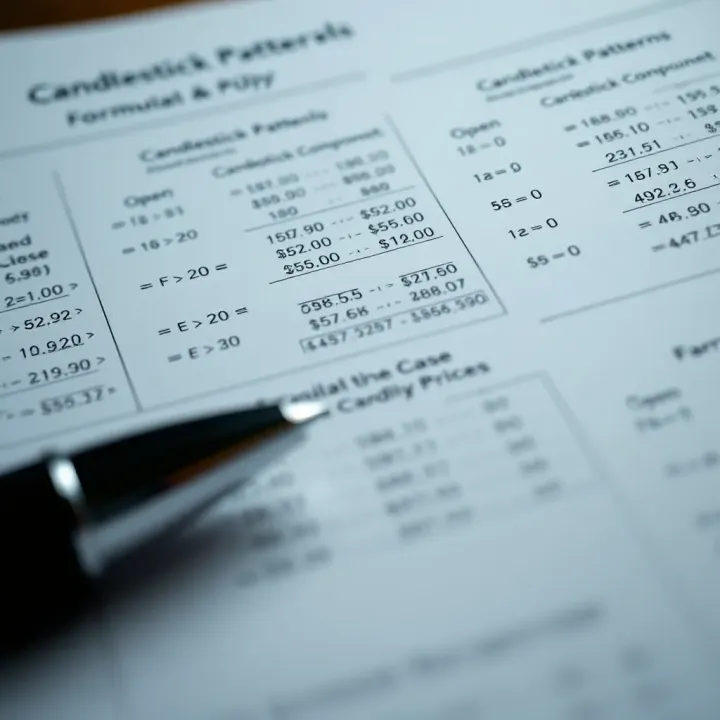
Let’s break down some key patterns:
Hammer and Hanging Man: Both have small bodies with long lower wicks. The hammer at the bottom signals potential bullish reversal, while the hanging man near highs warns of a bearish turn.
Engulfing Patterns: A bullish engulfing candle swallows the previous red candle, suggesting a shift in momentum upwards. The bearish opposite often signals selling pressure.
Doji: When open and close prices are nearly the same, forming a cross or plus sign, it reflects market indecision and possible trend change.
To trade effectively, knowing how to calculate these patterns' key elements is crucial. Formulas typically compare open and close prices with highs and lows to classify candle types and verify pattern authenticity. For example, the hammer’s lower wick should be at least twice the body length.
Mastery of these formulas turns guesswork into informed decisions, reducing risk and sharpening timing.
In South Africa, where market liquidity may vary and volatility can spike with news or international trends, practical tools help. That’s why PDF resources summarising patterns and calculation methods serve as handy references, especially when monitoring several shares or indices like the Top 40 or fintech stocks.
From recognising bearish pinbars to spotting morning stars, combining clear formulas with visual aids in PDFs can speed up your learning curve. And once you’ve got these tricks under your belt, you’ll interpret market signals with far more confidence and precision.
In the next sections, we’ll unpack how to derive these formula components, apply them in local trading scenarios, and suggest resources tailored for South African market players. Keep these basics close—your trading results might just thank you for it.
Candlestick patterns form the backbone of technical analysis for many traders in South Africa and worldwide. They offer a visual summary of price action within a specified time period, making it easier to grasp market sentiment at a glance. Understanding these patterns helps traders anticipate potential market reversals or continuations, thus informing better trade decisions.
Candlesticks display four key price points: the opening price, closing price, highest price, and lowest price during a trading session. The rectangular "body" shows the distance between opening and closing prices, while lines known as "wicks" or "shadows" extend from the body to indicate highs and lows. For example, a long green body with short wicks suggests strong buying pressure, whereas a small body with long upper wick might indicate sellers stepping in.
This structure offers practical benefits by summarising complex price movements into readable visuals. Rather than scanning through numbers, traders can quickly interpret the mood of the market and adjust their strategies accordingly.
The concept of using candlestick formations dates back to 18th-century Japan, where rice traders developed them to track rice prices. This method proved highly effective in spotting price trends and reversals without relying solely on numerical data. The Japanese technique laid the foundation for modern technical analysis, with many classic patterns still used today.
Knowing this background helps traders appreciate the purpose of candlestick patterns: they’re more than visuals; they are tools shaped by centuries of practical trading experience, adapted now for global markets including South Africa's JSE.
One of the main reasons traders rely on candlestick patterns is their ability to identify market sentiment quickly. For instance, a bullish engulfing pattern—where a large green candle fully covers the previous red one—indicates a shift from selling to buying pressure. This shift often signals an upcoming upward price move, which traders can exploit.
In volatile markets, like those influenced by global commodity prices or local political changes, spotting such shifts early can be the difference between profit and loss. Candlestick patterns thus offer a visual shortcut to understanding whether bulls or bears are in control.
Besides sentiment, candlesticks help visualise price action clearly. Instead of just numbers, traders see how prices move within a session—was there strong resistance at a certain level? Did buyers dominate at the close? This visual storytelling aids traders in pinpointing entry and exit points during active trading.
Candlestick charts transform raw price data into actionable insights by revealing the tug-of-war between buyers and sellers throughout the trading day.
Overall, recognising these patterns alongside their formulas can boost your trading toolkit and help you interpret South Africa’s markets with more confidence and clarity.
Understanding core candlestick patterns and their underlying formulas is vital for South African traders aiming to interpret market shifts with precision. These patterns offer a direct visual clue about market sentiment, enabling you to make calculated trading decisions rather than guessing. By learning the math behind them, you can distinguish genuine signals from random price movements, which is key when navigating volatile markets like the JSE.
Key candlestick patterns don’t just look interesting on your chart; their formula-driven calculations help confirm the strength and reliability of a signal. For example, knowing how to measure the wick length compared to the candle body size can tell you if bulls or bears had the upper hand during a trading session. This mathematical approach adds objectivity, allowing traders to spot reversals or continuations with greater confidence.
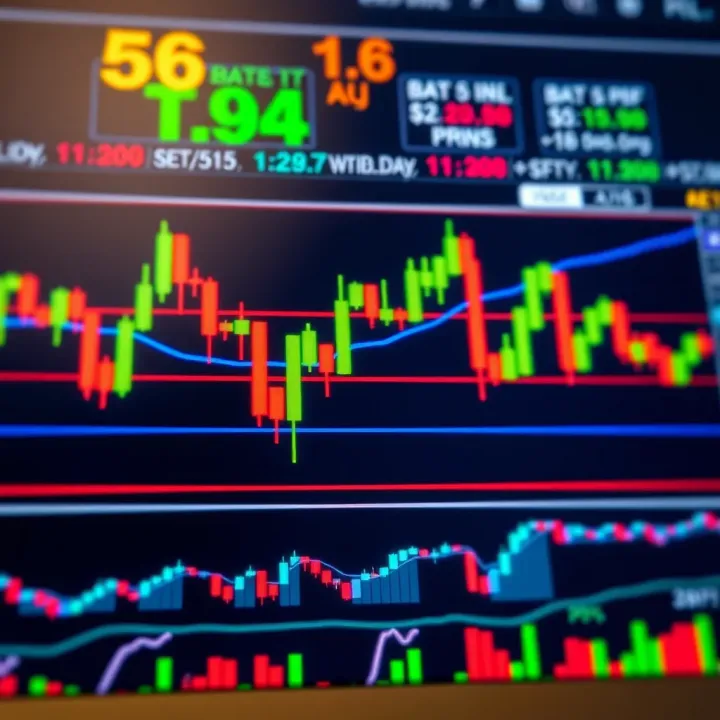
A hammer candlestick typically appears after a downtrend and signals potential reversal to the upside. It’s recognised by a small real body near the candle’s top and a long lower wick at least twice the body’s length. The formula focuses on the ratio of wick to body: if the lower shadow is twice or more than the body size, and the upper wick is minimal, the candle qualifies as a hammer.
In practice, this means when the price drops sharply during the session but closes near the opening price, it indicates buyers pushed back strongly. On Johannesburg Stock Exchange charts, spotting a hammer can guide traders to consider opening long positions or tightening stop losses on short trades.
The bullish engulfing pattern consists of two candles: the first a small bearish candle, followed by a larger bullish candle that completely 'engulfs' the former’s real body. The formula compares the length of the real bodies—if the second candle’s body is larger and covers the previous candle's body entirely, the pattern is confirmed.
For example, if a candle closes at R150 with a body size of R5 and the following candle opens below R145 but closes at R160, its body engulfs the first's. This signals a shift from selling to buying pressure, often prompting traders in South Africa to anticipate an upwards move and enter buy positions.
The shooting star appears after an uptrend and warns of a possible downturn. It is characterised by a small real body at the bottom of the candle and a long upper wick—usually twice or more than the body size—showing a failed attempt to push prices higher.
The formula involves measuring the upper shadow relative to the body, ensuring the upper wick dominates the candle shape. For traders on platforms like EasyEquities, recognising shooting stars against their price data helps identify moments when sellers overpower buyers, suggesting it might be time to exit long trades or prepare for sell positions.
This pattern is the bearish counterpart to the bullish engulfing and signals potential declines. It forms when a small bullish candle is swallowed by a larger bearish candle. The calculation again compares real body sizes: the second candle’s body must fully cover the first and close lower.
For instance, if a candle opens at R200, closes at R210, and the next opens at R212 but closes at R195, the larger bearish candle engulfs the smaller bullish one. Such signals are valuable for South African traders to anticipate reversals or to tighten risk controls ahead of possible downtrends.
Knowing these core patterns and applying their formulas transforms raw chart data into actionable signals. Remember, combining pattern analysis with volume and other indicators boosts your trading edge significantly.
Understanding the maths behind candlestick components sharpens your ability to interpret market moves. By breaking down candle elements into measurable parts, traders can move beyond guesswork and spot genuine patterns. This approach brings clarity, especially when you trade volatile South African stocks or currencies where price swings can be swift.
Calculating candle body size is a starting point. The body represents the range between a candle’s opening and closing prices. You simply subtract the smaller value from the larger one, regardless of whether the candle is bullish or bearish. For example, if a stock opens at R150 and closes at R155, the body size is R5. This number tells you how strong the buying or selling pressure was during that period. A bigger body often points to decisive price moves, while smaller bodies suggest indecision.
Wick length measurement involves calculating the thin lines above and below the candle body, known as shadows or wicks. You find the wick length by subtracting the body’s edge from the candle’s high (for the upper wick) or low (for the lower wick). If a candle’s high is R160 and close is R155, the upper wick is R5. Wick length indicates rejections or attempts by the market to push prices beyond the open-close range. Longer wicks can signal potential reversals or volatility, which helps confirm or question a pattern.
Real body vs shadow ratio compares the size of the candle body with its shadows to assess price action balance. A candle with a large body but tiny shadows shows strong directional movement. Conversely, if shadows are longer than the body, it suggests market hesitation or equal battle between buyers and sellers. This ratio supports spotting reliable patterns: for example, a hammer candle will have a small real body and a long lower wick, hinting at a possible rebound.
Volume considerations play a vital role alongside price formulas. High volume backing a candle pattern often confirms its validity, as it shows genuine market interest. For instance, a bullish engulfing pattern on low volume can be weak, but if volume spikes, it signals stronger chances of an upward move. In South African markets where liquidity can differ widely between blue-chip and smaller stocks, volume helps filter noise.
Price action thresholds act as practical cut-offs to distinguish meaningful price changes. Traders might set a minimum body size or wick length percentage compared to the total price range to confirm a pattern. For example, a candle body must cover at least 50% of the total candle range to count as a strong signal. These thresholds stop you from chasing false positives in erratic markets, like during ESKOM’s loadshedding-induced price gaps. Setting such rules improves pattern reliability and your overall trading confidence.
Applying precise calculations to candle structures brings discipline and consistency to your trading approach. It allows you to read market intentions more clearly and avoid making decisions based purely on gut feelings.
This mathematical approach is key to turning candlestick patterns from broad visual tools into concrete, tradable signals adapted for the South African context.
PDFs remain a dependable resource for traders keen on mastering candlestick patterns. They offer easy access to well-organised, oftentimes printable materials that you can study offline or on the go. Unlike scattered web pages, PDFs condense critical information like pattern formulas, examples, and chart illustrations into one neat package. This makes revisiting complex concepts quicker and less distracting.
Educational websites and broker platforms provide some of the most trustworthy PDFs on candlestick patterns. For example, local brokers like Standard Bank Online Trading or international platforms such as IG Markets often host free guides specifically tailored for traders at various levels. These PDFs generally include detailed pattern breakdowns, formula sheets, and practical tips that align with current market conditions.
Using materials from brokers also ensures you’re getting updated content relevant to South African markets, including adjustments due to local trading hours and regulations. Educational websites such as the Johannesburg Stock Exchange (JSE) learning centre also occasionally offer downloadable PDFs with essentials on technical analysis that complement candlestick knowledge.
South African trading communities and forums remain underused but powerful sources for PDF learning materials. Groups on sites like MyBroadband or even WhatsApp trading circles often share user-generated guides or locally contextualised content. These can include annotated charts of South African shares or forex pairs showing textbook and atypical patterns alike.
What sets community PDFs apart are the practical insights from lived experience—traders highlight particular nuances influenced by Eskom’s loadshedding schedule or municipal news impacting price action, factors often absent from generic PDFs. Ultimately, these resources ground theory in reality.
Practical exercises and chart analysis based on PDF resources sharpen your pattern recognition skills. Don’t just read through the formulas and examples—apply them! Use free charting tools like TradingView or local brokerage platforms to test patterns you learn about in the PDFs against live or historical charts. For instance, identify a hammer or engulfing pattern on a share like Sasol or Capitec, then note the candle body sizes and wick lengths as per the PDF instructions.
Tracking the accuracy of your pattern identifications helps build confidence. Plus, it reduces the risk of false signals when trading.
Integrating PDF insights into your trading plan enhances decision-making. PDFs often include alerts on volume confirmation or stop-loss positions based on pattern strength. Try incorporating these into your trade setups to manage risk better.
For example, after spotting a bullish engulfing pattern, the PDF might suggest placing a stop-loss just below the candle’s low and confirming with increased volume. This practical application aligns your strategy with tested methods rather than gut feeling.
A well-used PDF can be more than a reference; it can act as a mini mentor, guiding you step-by-step through recognising and acting on candlestick signals.
Using PDFs smartly means you’re creating a reliable, structured approach to trading in South Africa’s sometimes volatile markets. It’s about turning solid theory into workable, everyday strategies that suit your style and risk appetite.
Candlestick patterns offer valuable clues about market sentiment, but relying on them alone can leave gaps in analysis. Integrating these patterns with other technical indicators helps confirm signals and reduce false positives. This combined approach strengthens your trading strategies by adding layers of evidence before entering or exiting trades.
Moving averages smooth out price data to reveal underlying trends. When a bullish candlestick pattern, such as a hammer, forms near a key moving average—like the 50-day moving average—it suggests stronger likelihood of a trend reversal. For example, if the price tests this moving average and a bullish engulfing pattern appears, the alignment adds weight to a possible upswing.
On the other hand, a bearish engulfing candle occurring below the 200-day moving average may confirm deeper downtrends. Since South African traders often watch 50- and 200-day averages for trend direction, spotting candlestick patterns at these levels helps validate decisions rather than rely on patterns in isolation.
The RSI measures momentum by indicating overbought or oversold conditions. Combining RSI readings with candlestick signals helps identify optimal entry or exit points. For instance, spotting a bullish harami pattern while the RSI falls below 30 (oversold) strengthens the case for a potential bounce.
Conversely, a shooting star pattern appearing when RSI crosses above 70 (overbought territory) can flag a possible price reversal. Using RSI together with candle patterns allows South African traders to avoid chasing trends at exhausted price levels and time moves more precisely.
A key advantage of candlestick patterns is their ability to suggest where to place stop losses. For example, after identifying a hammer pattern signalling a bullish reversal, you might set a stop loss just below the hammer’s wick low. This approach limits losses if the expected bounce doesn’t materialise.
Using stops aligned with patterns also respects recent price action rather than arbitrary levels. This is vital in volatile markets like the JSE, where protecting capital through disciplined stops can mean the difference between a minor setback and a major loss.
Proper stop loss placement informed by candlestick patterns helps manage risk effectively and maintain consistent trade discipline.
Not all candlestick signals carry the same weight. Patterns with clear confirmation from volume or other indicators warrant larger positions, while weaker or ambiguous patterns call for smaller trade sizes.
For instance, a strong bullish engulfing candle supported by rising volume and RSI under 50 might justify a full-size trade. In contrast, a doji occurring in choppy conditions with low volume suggests caution — scaling down your position here helps limit risk.
By matching trade size to pattern conviction, South African traders can optimise risk-reward profiles and avoid overexposure during uncertain setups. This practical tactic improves long-term trading outcomes through measured exposure.
Integrating candlestick patterns into your trading strategy elevates your analytical edge. By combining patterns with moving averages and RSI, and implementing disciplined risk management—setting stop losses tied to pattern lows and adjusting trade size to signal strength—you reinforce your chances of making sensible trading decisions grounded in real market behaviour.
📉 Learn to spot hammer candlestick patterns to catch market reversals. Discover signal insights, pattern variations, & tips for sharper trading moves.
📈 Master high profit candlestick patterns for smarter trades! Learn to spot key signals with our practical guide and get exclusive PDF resources to boost your market analysis. Perfect for South African traders aiming for success!

Explore how the gender binary shapes South African society, its impact on non-binary individuals, and the rise of gender diversity 🌍👫⚧

Explore how global forex trading works 🌍, key players, market hours ⏰, currency price factors 💸, risks ⚠️, strategies 📈, and regulations 🇿🇦 tailored for South African traders.
Based on 6 reviews