

Understanding Binary Basics for Beginners
🔢 Learn how binary numbers work, why they matter in computing, and try simple conversions and calculations. Perfect for beginners keen to understand tech basics in SA.
Edited By
Amelia Shaw
The su binary is a command-line utility found in UNIX-like operating systems that allows a user to switch to another user account, most often the root or superuser. Its core function is to grant temporary elevated privileges, letting users run commands with the permissions of the target account. This makes su vital for tasks such as system maintenance, installing software, or changing system settings.
Using su isn’t as straightforward as entering a password; it involves important security considerations. Because su grants unrestricted access when switched to root, any misuse—whether accidental or malicious—can compromise the entire system. For example, an attacker gaining access through a weak root password could gain full control and cause serious damage.
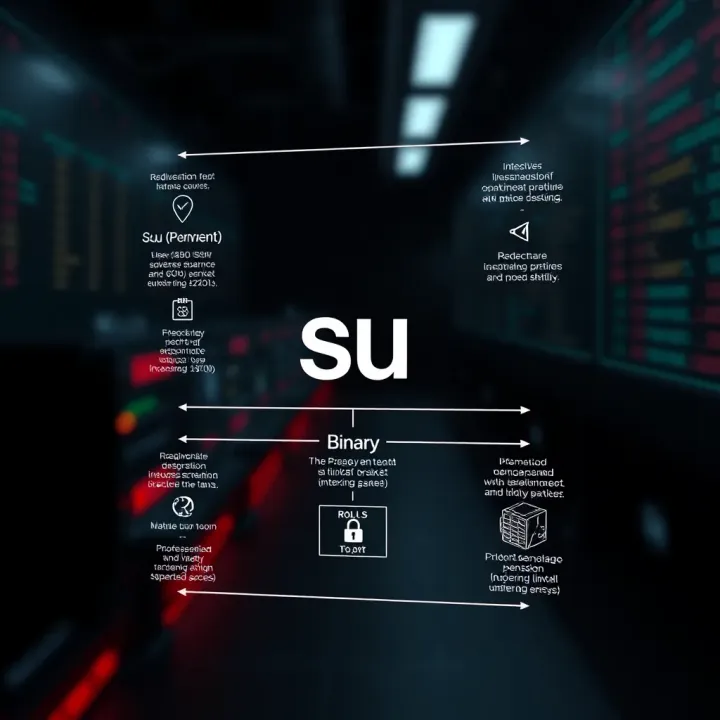
Here’s how su typically works:
When you run su, it prompts for the target user’s password (often the root password).
Upon correct entry, the user shell switches, inheriting all permissions of that user.
The session continues until the user exits.
Note: Many systems nowadays favor
sudooversubecausesudoallows finer control, letting administrators grant limited elevated privileges without sharing the root password.
It’s important for traders, analysts, and consultants managing UNIX servers or cloud infrastructure to understand the risk that comes with privilege escalation via su. Failure to properly restrict or log this activity can lead to unnoticed insider threats or external breaches.
To manage su securely:
Limit Access: Ensure only trusted users can run su by restricting access to the root password.
Use Strong Passwords: Root should have a complex, non-guessable password.
Consider Alternatives: Use sudo or RBAC (Role-Based Access Control) for better granularity.
Audit Usage: Regularly monitor su usage via system logs to detect unusual access.
In short, understanding su’s role and risks helps you protect critical systems by controlling who gets elevated access and how. Using su responsibly is a key aspect of maintaining system integrity and preventing costly security incidents.
The su binary holds a foundational role in UNIX and Linux systems by enabling users to switch identities or temporarily gain higher privileges. System administrators value su because it offers a straightforward way to perform tasks under different user contexts without logging out and back in. Understanding how su works is key to managing access and maintaining system security.
Switching user identities is the primary function of su. When you invoke su with a specific username, the system switches your session to that user. For instance, a developer might use su dbadmin to manage database configurations without needing multiple login sessions. This feature simplifies workflow by letting users operate as others where necessary, avoiding the hassle of juggling separate sessions.
Temporary privilege escalation means users can elevate their rights for limited tasks. Often, su is used to switch to the root user—the system administrator with full control—allowing for changes that require higher privileges. This is handy when installing software or modifying system files, but users should be cautious since having root access increases the risk of accidental or malicious damage.
The authentication process behind su requires the target user's password, not the current user's. This means when you try to become root using su, you must enter the root password. This distinct approach keeps privileges secure by ensuring only authorized users can switch identities. Many enterprises set strong policies around root passwords to maintain this security layer.
In terms of session management, su spawns a new shell under the other user’s ID while retaining environment settings unless specifically instructed otherwise (using the - option). That means you’re basically starting a fresh session as that user. This clean switch helps prevent privilege leaks but also requires logging out of the elevated session correctly to avoid lingering permissions.
Understanding the differences from sudo clears up common confusion. Unlike sudo, which grants limited privilege escalation to predefined commands and logs all actions, su switches the entire session to another user. sudo doesn't require the target user's password but asks for the current user’s password and offers finer control and better auditability. Choosing between su and sudo depends on the admin’s policies and the level of control needed.
Remember, while su is a powerful tool, it must be used with care, since unrestricted access to other user accounts could lead to serious security risks.
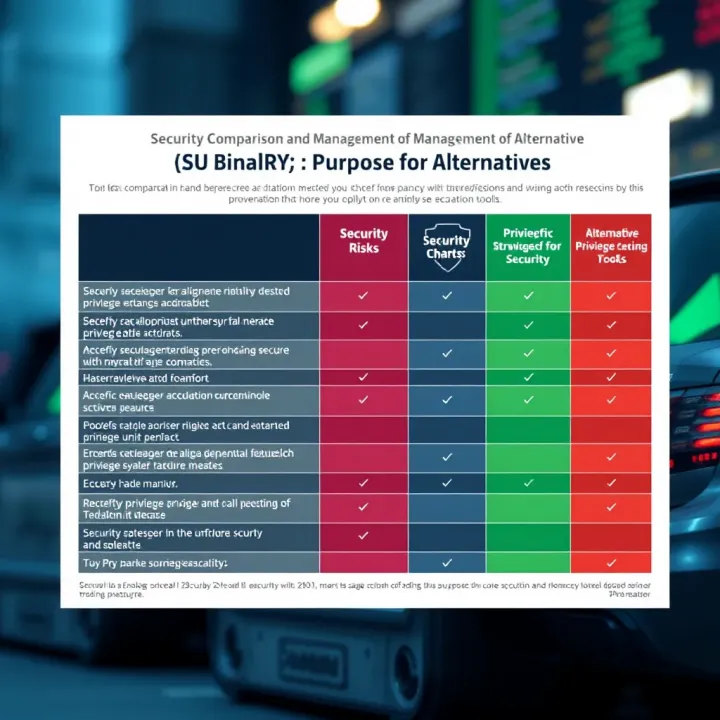
The su binary is a powerful tool that grants temporary access to another user’s privileges, usually root. Because of this, security implications tied to its use demand close attention. Misuse or careless management can easily open doors for attackers, making it essential for system administrators to understand key risks and how to guard against them.
Password sharing and exposure poses a serious threat when using su. Since accessing su typically requires the target user’s password, sharing credentials among team members becomes tempting but dangerous. For example, if multiple employees use the root password to switch users, it’s difficult to track who performed what actions. This practice increases the chance of inadvertent or malicious misuse. Furthermore, reuse or weak passwords mean a single leak can compromise multiple systems, so it’s best to avoid sharing passwords and instead assign distinct accounts or rely on tools with finer-grained controls.
Audit challenges and logging gaps are another downside of su. Unlike sudo, which logs each command run through it, su usually logs only the initial switch event. This limitation creates blind spots when monitoring system changes or investigating incidents. For instance, if someone switches user with su and runs several commands, there’s rarely a reliable record tying the commands back to that specific user. This makes post-incident analysis tricky and weakens accountability. To address this, organizations often complement su usage with detailed session logging or prefer sudo for better audit trails.
Over the years, known exploits and system compromises involving su have surfaced, sometimes allowing attackers to bypass authentication or escalate privileges without proper credentials. These vulnerabilities highlight su’s sensitivity in the security ecosystem. Notable cases include buffer overflow exploits or logical flaws that permitted unauthorized access. While modern UNIX-like systems patch these holes quickly, the risk underlines why sysadmins must stay vigilant and avoid relying solely on su without additional security measures.
The importance of timely updates and patches can’t be overstated when it comes to su. Installing security fixes promptly guards against the latest exploit attempts targeting privilege escalation tools. For example, a patched su binary might eliminate a critical vulnerability that attackers could have used to gain root access remotely. Without regular updates, systems stay exposed longer than necessary. This is why maintenance policies in enterprises emphasize staying current with OS updates and security advisories related to binaries like su.
The bottom line is, su’s power comes with risk. Proper password hygiene, thorough auditing, and keeping software patched are the frontline defenses against those risks.
Understanding these security considerations helps operators make safer decisions around using su and protecting their UNIX and Linux environments from avoidable threats.
Managing su access is a key part of keeping your system secure. Since su grants powerful privileges, you want to make sure only trusted users can switch identities. Without proper management, su can expose your system to risks like unauthorized access or accidental damage. By following best practices, you reduce these risks and improve accountability.
User group management helps control who can use the su command by organizing users into specific groups. For example, by limiting su access to an "admin" or "wheel" group, only members of that group can switch to the root user. This reduces the risk of random users gaining elevated privileges and simplifies managing permissions across many accounts.
Setting up groups is practical on Linux systems using commands like groupadd and assigning users with usermod. You can then restrict su access by configuring the PAM (Pluggable Authentication Modules) system or editing the /etc/su configuration to limit the command's availability. This method keeps your system tidy and ensures only vetted users have the keys to the kingdom.
Access control lists (ACLs) provide a more fine-grained way to control su usage beyond basic group management. ACLs let you specify user permissions on a per-file or per-command basis, allowing you to grant or deny su execution to specific users or even times of day.
For instance, an ACL might allow a junior sysadmin to use su only during working hours, preventing off-hours access. Using commands like setfacl on the su binary, you can set these permissions. This level of control adds an extra layer of security, especially in larger teams where not everyone needs the same level of access.
System log integration means connecting su usage events to central log files. When someone uses su, the event gets recorded with details like username, timestamp, and success or failure status. Tools like syslog or journald capture this data, making it easier to audit who accessed elevated privileges and when.
This log history is invaluable for tracing back any suspicious activity or errors. For example, if there’s a security incident, you can quickly identify which accounts switched to root and what they did. It also helps meet compliance requirements in regulated industries.
Alerting on suspicious behavior takes monitoring a step further by triggering notifications when things seem off. Say an unusual number of failed su attempts occur or a rarely used account suddenly gains root access; an alert can notify admins immediately.
You can set up these alerts using monitoring tools like OSSEC, Splunk, or even simple scripts tied into system logs. This rapid response capability helps nip potential breaches in the bud before they cause harm. It also keeps you ahead of insider threats, which might otherwise go unnoticed for days or weeks.
Restricting who can use su and keeping a close eye on its usage are practical steps that pay off in system safety and easier management. Never leave su permissions wide open — be smart about controls and monitoring.
In sum, controlling su access through user groups and ACLs, combined with thorough monitoring, forms a solid backbone for your system security strategy. It balances flexibility for administrators with essential safeguards against misuse.
While the su command remains a classic tool for switching user identities, it doesn't suit every scenario, especially when it comes to managing access securely in complex environments. Alternatives like sudo, PolicyKit, and setuid programs offer more tailored solutions. They address some limitations of su, like lack of granular control and detailed logging, providing more flexibility and security options.
Sudo lets system administrators assign specific commands that users can run as root or other users, rather than handing over full access. This means, for example, an analyst in a trading firm could get permission to restart a database service without getting the keys to the entire system. Such granularity minimizes risk by limiting the scope of elevated privileges.
This approach is especially useful in environments where you want to enforce the principle of least privilege. Instead of sharing root passwords outright — which is risky and hard to audit — sudo allows for controlled access that fits individual roles.
Unlike su, sudo logs every command executed with elevated privileges, including who ran it and when. These logs can integrate with system monitoring tools, helping consultants or security analysts spot unusual patterns promptly.
For instance, if a broker’s workstation suddenly issues a command to modify firewall settings outside business hours, auditing sudo logs makes it easier to track that activity back to a specific user. This level of accountability helps organizations comply with regulatory requirements and strengthens incident response.
PolicyKit offers a way to manage privileges for graphical applications, making it handy for tasks that aren't purely command-line. It lets administrators define policies that determine when and how users can execute certain actions, like mounting external drives or adjusting network settings, without needing full root access.
In practice, this means a trader could approve a signed software update or change display settings without exposing them to system-wide risks. It blends convenience and security in environments where GUI interaction is common.
Setuid programs run with the privileges of their owner, commonly root, regardless of who executes them. While this allows specific tasks to gain elevated rights temporarily, it comes with significant security risks if misused or poorly coded.
For example, a poorly written setuid program might allow an attacker to gain unauthorized root access through exploitation. Because of this, system admins must carefully audit and limit setuid binaries, considering alternatives like sudo where possible.
Choosing the right tool depends on balancing convenience, security, and accountability. Alternatives to su give you more control while helping protect critical systems from misuse.
🔢 Learn how binary numbers work, why they matter in computing, and try simple conversions and calculations. Perfect for beginners keen to understand tech basics in SA.

🎵 Explore binary form in music — its two-part structure, historical roots, variations, and how composers craft balance and contrast for striking compositions.

🌟 Discover binary stars—pairs of stars orbiting each other—that help astronomers measure stellar mass, study evolution, and unlock cosmic dynamics in clear detail.

🔢 Learn to read and use binary code charts with ease! Understand binary numbers, convert to decimals, and explore everyday tech applications in South Africa.
Based on 7 reviews