

Practical Forex Trading Plan Guide with PDF Templates
📈 Craft a practical forex trading plan to manage risks, stay disciplined & boost decisions. Find handy PDF templates to tailor your strategy & succeed locally.
Edited By
Charlotte Murray
PDFs are a staple resource for anyone diving into forex trading. They offer a compact, portable way to digest everything from the basic lingo to the nitty-gritty of complex trading strategies. But not all PDFs pack the same punch, so knowing what to look for matters.
Most quality forex trading PDFs begin with the essentials: what forex trading is, how currency pairs work, and the fundamental market forces that move exchange rates. For example, you'll find explanations of terms like "spread," "pips," and "leverage"—all crucial for anyone not looking to fly blind.

Beyond basics, many PDFs target specific strategies. You might see swing trading methods, scalping tips, or guidance on reading technical indicators like Moving Averages and RSI. A standout PDF will also dig into risk management techniques, such as setting stop-loss orders or calculating proper position sizes, which often separate successful traders from the rest.
Knowing where to find reliable PDFs is just as important as the content they offer. Trusted sources include brokerages like OANDA or Forex.com, major financial education platforms, and even published books that offer free sample chapters in PDF format. Skipping shady sites that promise guaranteed profits is essential to avoid wasted time and misinformation.
Once you’ve found a solid PDF, the key is to put what you read into action. Practice using demo accounts that most brokers provide. Apply chart analysis techniques or test a new trading strategy mentioned in the PDFs. By bouncing between reading and practical steps, you’ll retain info better and build confidence.
Keep in mind: A PDF alone won’t make you a forex expert. Consistent practice and cautious application of good advice are what really grow your skills.
To recap, a great forex trading PDF should cover:
Clear explanations of currency trading basics
Practical trading strategies and examples
Risk management tips to protect your capital
Up-to-date market insights or economic factors impacting forex
From there, it's about continuous learning and testing your knowledge in real-market conditions. With the right PDFs and hands-on practice, you'll steadily sharpen your forex trading game.
Grasping the basics of forex trading is critical before diving into any detailed guide or PDF material. Without a solid foundation, even the best strategies can feel like decoding a foreign language. Knowing the core concepts helps you understand market behavior, manage risks, and make informed decisions.
Forex trading involves buying one currency while selling another, presented as currency pairs like EUR/USD. The first currency is called the base, and the second is the quote currency. For example, if EUR/USD is quoted at 1.1200, it means 1 euro costs $1.12. Understanding this is vital since your profit or loss hinges on how these values move.
The forex market runs 24 hours a day during weekdays and works as a decentralized network where banks, brokers, and traders buy and sell currencies. Unlike stock markets, there’s no central exchange. This means prices can vary between brokers, but it also offers high liquidity and constant opportunity. For instance, a trader in New York can react to Asian market news during their morning session.
Leverage lets you control a large trading position with a smaller amount of your own money, known as margin. For example, with 50:1 leverage, $1,000 can control $50,000. While this magnifies gains, it also increases risk. Using too much leverage can wipe out your account quickly if the market turns against you. It’s a tool that requires discipline and understanding.
A pip is the smallest price move in forex, typically 0.0001 for most pairs. The spread is the difference between the bid and ask price, which represents trading costs. Lot size is the amount of currency you trade; a standard lot is 100,000 units, but mini and micro lots let smaller accounts participate. These terms directly affect how much you earn or lose per trade, so knowing them lets you manage costs and position sizes wisely.
The bid price is what buyers are willing to pay, while the ask price is what sellers want. The spread is the gap between these two. For example, if EUR/USD has a bid of 1.1200 and ask of 1.1202, the spread is 2 pips. Traders buy at the ask and sell at the bid, so tighter spreads are better for low-cost trading.
Orders define how you enter or exit trades. Market orders execute immediately at the current price, while limit orders set a target price to buy or sell. Stop orders trigger once the price hits a certain level, useful for stop-loss or take-profit. Understanding order types is essential to execute your strategy exactly as planned, preventing surprises in fast-moving markets.
Learning these basics equips you with the language and mechanics needed to get the most out of forex trading PDFs, making complex strategies easier to grasp and apply.

Finding and choosing the right forex trading PDFs is a key step for anyone wanting to build solid knowledge quickly and effectively. Given the flood of resources online, knowing where to look and how to pick reliable, practical materials can save you from misinformation and wasted hours. Proper selection also means the PDFs you use will align with your learning goals, whether that's grasping basics or refining advanced strategies.
Broker websites and educational platforms often serve as trustworthy starting points. Major brokers like OANDA or IG provide free, well-structured PDFs tailored for different skill levels. These materials typically reflect real market conditions and come from practitioners who understand what traders need on practical terms. Using broker-provided PDFs can also familiarize you with their particular trading platforms and tools.
Trading communities and forums like Forex Factory or BabyPips offer access to PDFs shared by experienced traders who have tested strategies and market hypotheses in real life. These communities also provide discussions around the content, which adds context and clarifies complex points. However, the quality varies, so cross-checking is critical before relying heavily on community-shared documents.
Financial websites and free resources such as Investopedia or the CME Group’s education section host a variety of PDFs covering everything from forex basics to economic event impacts. These are usually well-researched and updated to match current market dynamics. The advantage here is the breadth of topics and the backing of reputable financial institutions, lending credibility and currency to the information.
When assessing PDFs, checking author credentials matters a lot. A Forex guide authored by a recognized financial expert, analyst, or veteran trader will nearly always be more reliable than one with unknown authorship. For example, materials by someone with CFA certification or a long track record in market analysis carry higher weight. Confirming credentials helps avoid biased or simplistic content that won’t help you navigate real trading scenarios.
Verifying up-to-date content means scanning for publication or revision dates. Forex markets change swiftly, influenced by evolving economic policies and geopolitical events. A PDF published five years ago won’t reflect today’s nuances, such as recent central bank strategies or new technology in trading. For instance, a guide explaining forex trading without any mention of algorithmic trading or current currency volatility patterns is likely outdated.
Lastly, looking for clear explanations and examples makes a huge difference in how quickly you absorb complex concepts. Good forex PDFs break down jargon into plain language and include charts, trade scenarios, and step-by-step guides. For instance, a PDF detailing how to use moving averages with actual historical data charts will speed up your learning compared to one full of dense paragraphs with no illustrations.
The bottom line is that finding reliable, well-crafted forex trading PDFs through the right sources and evaluating their quality thoughtfully can set you on a confident path toward mastering forex trading.
From here, pairing PDFs with hands-on practice like demo accounts can turn theory into skill, but it all starts with choosing your learning materials wisely.
Forex trading PDFs often cover core topics that traders of all levels need to understand. These include technical analysis methods, fundamental analysis insights, and risk management strategies. Each plays a vital role in building a solid trading foundation, helping you make smarter decisions rather than relying on guesswork.
Chart patterns and indicators provide visual clues about market sentiment and possible future price moves. PDFs typically explain common patterns like head and shoulders or double bottoms, which signal trend reversals or continuations. Indicators such as RSI or MACD help confirm momentum or potential overbought conditions. For example, spotting a double-bottom pattern on the EUR/USD chart could hint that prices are about to bounce upward, signaling a buying opportunity.
Trend lines and support/resistance act as basic tools for identifying price behavior limits. Trend lines connect lows in uptrends or highs in downtrends to visualize momentum direction. Support levels represent price floors where buyers often step in, while resistance levels serve as ceilings where selling pressure may appear. A forex trader reading about how USD/JPY respects a support zone near 109.50 would better time their entries and exits.
Using moving averages helps smooth out price data to identify trends and potential reversal points. Simple Moving Average (SMA) or Exponential Moving Average (EMA) crossovers can signal shifts in momentum. For example, a 50-day moving average crossing above the 200-day moving average (golden cross) usually gets attention as a bullish sign, making it easier to catch medium-term trends.
Economic indicators that move currencies like employment reports, inflation data, or GDP figures are essential in PDFs explaining currency valuation. For instance, a stronger-than-expected U.S. jobs report often boosts the dollar because it suggests economic growth, influencing traders to buy USD pairs.
Central bank policies and news impact detail how decisions by the Federal Reserve, ECB, or other institutions affect forex markets. Interest rate hikes typically strengthen a currency as they attract capital inflows. PDFs discuss how to watch announcements and statements closely since even subtle language shifts can sway market sentiment abruptly.
Geopolitical factors include events like elections, trade disputes, or conflicts that sway currency prices by affecting economic stability. A PDF might use the US-China trade tensions as a case study, showing how tariffs led to increased volatility in currencies like the yuan and the dollar.
Stop losses and position sizing are key moves to protect capital. PDFs emphasize placing stop-loss orders at levels that limit losses if a trade goes against you. Position sizing shows how adjusting trade size based on risk tolerance and account balance prevents blowing up your portfolio. For example, risking only 1-2% of your account on any trade helps preserve funds during losing streaks.
Managing leverage safely is critical since leverage amplifies both profits and losses. Forex trading PDFs typically warn against using excessive leverage and suggest practical limits. For instance, many recommend using no more than 10:1 leverage until you’re more experienced, keeping potential losses manageable.
Psychology of risk addresses mental discipline and emotional control. PDFs often highlight how fear and greed can cloud judgment, urging traders to stick to their plans. Understanding cognitive biases and learning to manage stress leads to healthier trading habits and long-term success.
Mastering these key topics through forex trading PDFs offers a solid stepping stone. It’s not just theory — knowing how to spot chart patterns, interpret economic news, and manage risk shapes more confident and consistent trading skills.
Using Forex trading PDFs effectively means more than just reading; it involves actively engaging with the material to build your skills and knowledge. These documents serve as foundation blocks, but without a clear plan to absorb and apply the lessons, you’ll likely miss out on their full value.
Identifying your current knowledge level is crucial before diving into any Forex PDF. If you’re new to Forex, start with basic concepts like currency pairs and leverage. If you’re more advanced, focus on strategies or risk management. Knowing where you stand helps you avoid wasting time on materials that are either too simple or overly technical, keeping your learning curve progressive yet steady.
Focusing on relevant sections means zeroing in on parts of the PDFs that match your immediate needs or interests. For example, if you struggle with technical analysis, concentrate on chapters covering indicators and chart patterns. This targeted approach prevents information overload and makes the study process more manageable, so your effort translates into practical understanding faster.
Complementing PDFs with hands-on practice is where learning really clicks. Reading about trading concepts like stop losses or position sizing is one thing, but putting those into action in a simulated environment cements the knowledge. You can’t just skim PDFs and expect to trade successfully without trying out what you’ve learned, so coupling theory with practice is a must.
Using demo accounts for testing strategies is a safe way to trial the ideas you find in PDFs without risking real money. Most brokers offer free demo accounts that mimic live markets. This method lets you test risk management, entry, and exit rules straight from the PDFs. If a certain approach consistently loses, you know to adjust or drop it before going live.
Note-taking and summarizing turn bulky PDFs into bite-sized, easy-to-review insights. Jotting down key points or drawing diagrams helps reinforce learning and serves as a quick reference. For instance, sketching a trend line example or listing economic indicators keeps those concepts fresh in your mind, which is handy when making split-second trading decisions.
Adapting concepts to your trading style is vital because no one-size-fits-all exists. Maybe you find aggressive scalping stressful but are comfortable with longer-term swing trades. The PDFs provide frameworks and ideas, but you should tweak strategies to fit your appetite for risk, schedule, and personality. That way, the knowledge turns into actionable habits rather than rules you struggle to follow.
The bottom line is: PDFs offer solid knowledge, but your growth depends on how you set goals, interact with the content, and apply what you learn through practice and adaptation.
PDFs serve as a handy way to get a firm grip on forex trading concepts, but it's vital to be aware of their limits. Knowing what these documents can and can't do will save you from hitting roadblocks as you progress in your trading journey.
Forex markets move quickly, often influenced by news events out of the trading textbooks. PDFs tend to be static, meaning once they're downloaded, the info doesn't change. This lack of real-time updating can leave traders reacting to outdated scenarios. For example, an economic report might shift market sentiment, but a PDF made months prior won't reflect that shift. Interaction is another issue; many traders learn better with dynamic charts, quizzes, or video explanations—things PDFs generally can't offer.
Not all PDFs are created equal—some may carry outdated stats or trade tactics that no longer apply. There's also the risk of bias if the material comes from a broker promoting specific platforms or services. This bias can color your view of what's effective or safe. Staying alert means cross-checking facts from PDFs with trusted sources or official economic data releases to avoid sinking time into strategies that are past their prime.
Relying solely on PDFs is like trying to read a map without seeing where you are. Combining different learning tools better equips you to handle market twists. For example, podcasts offer expert interviews and stories that bring forex lessons to life, while demo trading platforms let you practice without risking money. These additions provide context and real-world application, giving you a more rounded grasp on the trading game.
Keeping an eye on financial news and economic calendars is vital. These sources flag events like Federal Reserve announcements or job reports that can cause big currency swings. PDFs won’t warn you about an unexpected rate cut that just happened. Checking these schedules daily helps you anticipate market volatility and adjust your trades accordingly.
Webinars and forums add a social element to learning forex. You get to ask questions directly to experienced traders and bounce ideas around with peers. This dynamic can explain complex concepts that PDFs might oversimplify. Platforms like Forex Factory or social media trading groups frequently host discussions about breaking market trends, providing timely insights you won’t find in static documents.
The forex market’s landscape changes. Strategies that worked last year might flop today due to geopolitical shifts or regulatory changes. Regularly revisiting your study materials and supplementing them with the latest reports or tutorials ensures you stay sharp. For instance, updating your PDFs with new editions or pairing them with current market analysis blogs can keep your toolkit relevant.
The bottom line is that PDFs can form a solid starting block, but staying informed through multiple, timely sources is what keeps your trading edge sharp.
📈 Craft a practical forex trading plan to manage risks, stay disciplined & boost decisions. Find handy PDF templates to tailor your strategy & succeed locally.
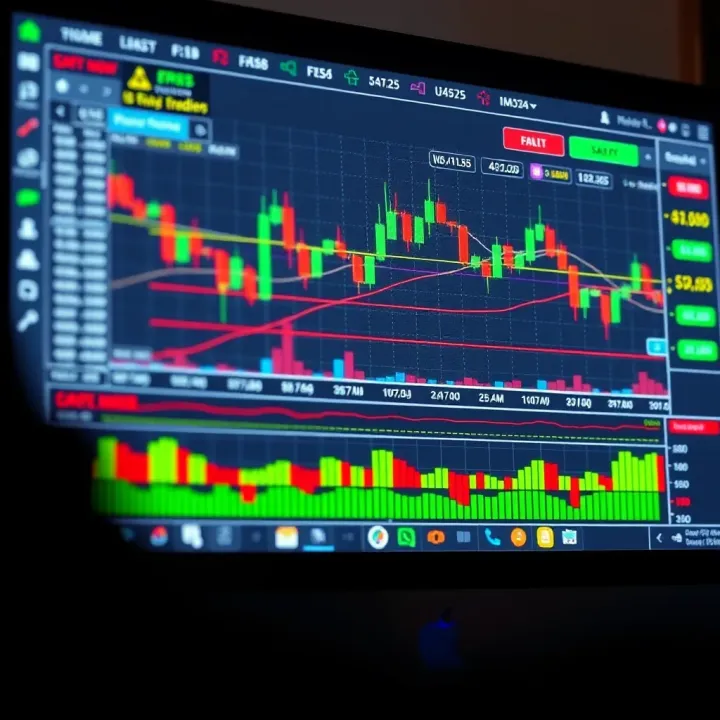
📈 Learn forex trading effectively with video guides! Discover types of videos, key tips, and how to sharpen skills while avoiding common errors.

📘 Master forex trading with essential PDF guides tailored for South African traders. Learn to choose quality training, grasp key concepts, and apply skills confidently.

📊 Understand forex trading basics, market hours, platforms & key strategies tailored for South African traders. Manage risks and spot opportunities in currency exchange.
Based on 6 reviews