

Binary Trading in South Africa: What to Know
Considering binary trading in South Africa? ⚖️ Learn how local rules, reliable platforms, risks, and smart strategies can help you trade safely and confidently. 💡
Edited By
Oliver Mason
Binary options trading has gained traction among South African traders looking for a clear-cut way to engage with financial markets. Unlike traditional share or forex trading, binary options offer a fixed risk and fixed reward structure, making it easier to understand potential outcomes upfront. However, this simplicity masks some complexities and risks that every trader should know before putting money on the line.
At its core, a binary option is a financial contract where you predict whether an asset's price will be above or below a certain level at a specified expiry time. If your prediction is correct, you earn a predetermined payout; if not, you lose the initial amount invested. Unlike conventional trading where profits and losses fluctuate, binary trading outcomes are all-or-nothing, commonly referred to as 'yes or no' bets.
Assets in binary options commonly include major currency pairs like USD/ZAR or EUR/USD, indices such as the JSE Top 40, commodities like gold and platinum, and even cryptocurrencies. This variety gives traders flexibility to pick markets they understand or want exposure to. For instance, during periods of loadshedding uncertainty, many traders turn to stable assets like gold, betting on its price movements in binary form.
Binary options offer a fixed payoff, making it easier to manage risk, but understanding the odds and market drivers remains essential.
It’s worth noting that while the fixed payout structure might seem attractive, binary options carry significant risks. Many brokers operate with short expiry times ranging from 60 seconds to a few hours, tempting impulsive trades. Moreover, South African Regulation by the Financial Sector Conduct Authority (FSCA) is still evolving on this front, so traders must ensure they use licensed platforms.
Practical tips for South African traders:
Always verify broker licensing status with the FSCA.
Start trading with small stakes, especially on volatile assets.
Use demo accounts to get accustomed to binary platforms without risking capital.
Avoid chasing losses; binary options can be addictive due to their fast-paced nature.
Understanding these basics sets you up to explore binary options with eyes wide open. The next sections will cover specific strategies, risk-management techniques, and the legal environment in South Africa to help you trade smarter and safer.
Understanding what binary option trading is and how it operates forms the backbone of informed decision-making for South African traders. This type of trading offers a simple betting-like approach where you predict whether an asset’s price will rise or fall within a specific time frame. Unlike conventional trading, it packages the risk and reward into fixed outcomes, making it particularly attractive for those wanting clear limits on potential losses.
Binary options are financial contracts allowing traders to speculate on the direction of an asset’s price—such as stocks, currencies, or commodities—without owning the actual asset. Think of it like guessing whether the price of gold will be above R1,000 per gram at a set time. If your prediction is right, you get a fixed payout; if wrong, you lose your initial stake. This "all or nothing" nature highlights its straightforward appeal.
What sets binary options apart from traditional trading is the simplified risk profile. Unlike owning shares or forex positions, where prices fluctuate continuously with variable risk, a binary option’s outcome is fixed at the start. You know your maximum possible win or loss right away. This clarity attracts traders who want quick results without needing to manage complex orders or margin calls.
A binary options trade revolves around two main choices: call and put options. Selecting a call option means you predict the asset’s price will rise above the strike price by expiry. Conversely, a put option signals your belief that the price will fall below the strike price. For example, if you expect the JSE Top 40 index to finish higher in an hour, you’d buy a call option.
Expiry times for these trades can vary greatly—from as short as 60 seconds to several days or weeks. Payouts are generally fixed and advertised upfront, often between 70% and 90% of your stake. If your call or put option finishes "in the money," you receive your initial stake back plus the fixed return. If it finishes "out of the money," you lose what you invested in that trade. This payout structure forces a clear cost-benefit calculation before entering each trade.
Knowing how binary options work is key to managing your risk and expectations, especially in volatile markets like forex or commodities influenced by South African economic factors. It helps you choose your trades with eyes wide open, rather than relying on guesswork.
To sum up, binary option trading strips speculation down to its essentials: a yes-or-no bet about price direction within a set time, with fixed risks and rewards. For South African traders looking for a concise and upfront trading experience, grasping these basics is the first step towards trading confidently and safely.
Choosing the right asset class is key for success in binary option trading. Different assets behave uniquely, affecting the risks and potential rewards. For South African traders, understanding these asset classes helps craft a trading approach aligned with market trends and personal goals.
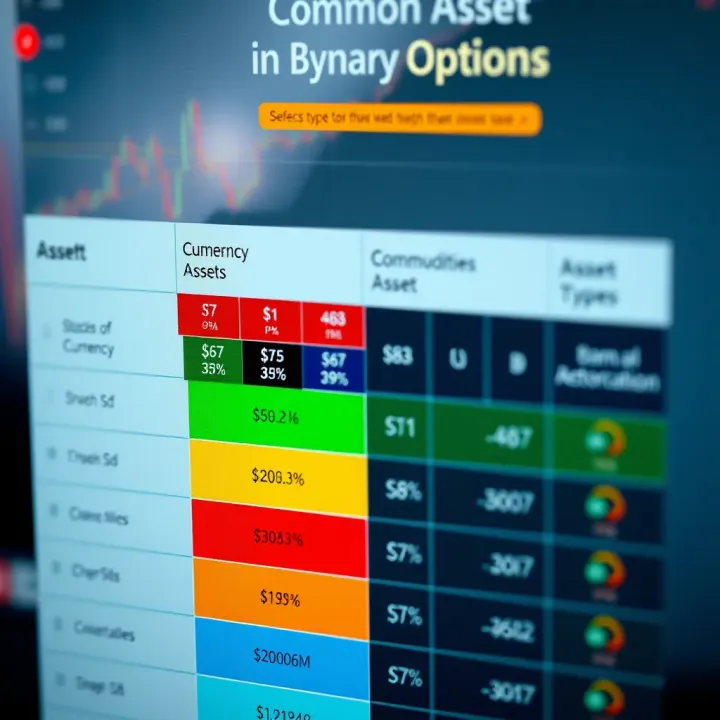
Stocks and shares are a common choice, offering exposure to company performance. Traders speculate on whether a stock price like that of Naspers or Sasol will rise or fall within a set time. This asset class is attractive because it ties trades to real economic activity, but stock prices can be volatile, influenced by local events, corporate results, or global trends.
Forex currency pairs involve trading one currency against another, such as the South African rand (ZAR) versus the US dollar (USD). The forex market is highly liquid and operates 24 hours, providing ample opportunities for quick expiry trades. Traders often watch factors like SARB interest rate decisions or political developments in Mzansi to anticipate rand movements.
Commodities like gold and oil hold particular appeal in South Africa, where gold mining is historically significant. The price of gold may fluctuate with global economic uncertainty or US dollar strength, offering predictable responses to macro events. Oil prices respond to geopolitical tensions and supply disruptions. Commodity-based trades can diversify your portfolio, but price swings demand careful timing.
Market indices represent a basket of stocks, such as the JSE Top 40 or the S&P 500. Trading indices gives insight into general market sentiment without focusing on a single company's performance. For example, during loadshedding news, the JSE Top 40 can show collective investor confidence or fear. Indices often exhibit less volatility than individual stocks, which suits traders preferring steadier movements.
Volatility considerations matter because binary options thrive on price movement within brief periods. High volatility can mean bigger profit chances but also increased risk. For instance, trading forex pairs like USD/ZAR during SARB announcement days can lead to dramatic swings. Conversely, trading indices or blue-chip stocks during stable economic periods may bring steadier but smaller returns.
Market hours and liquidity influence how easily you can enter or exit trades. Forex markets are open nearly all day, but South African stock markets close by 5 pm SAST, limiting trading windows for shares. Liquidity refers to how many buyers and sellers exist for an asset; highly liquid assets like gold and forex pairs ensure smoother trades and fairer prices. Dipping into less liquid markets might leave traders stuck with unfavourable pricing or delays.
To get the most from binary option trading, match your choice of asset with your risk appetite, preferred trading times, and market knowledge. This awareness makes your trades sharper and confidence higher.
Understanding the balance between risks and rewards is essential for anyone trading binary options in South Africa. Unlike some investment types where returns can be unlimited but losses potentially significant, binary options lock in both the possible gain and the maximum loss at the outset. This fixed risk framework means traders can precisely measure their potential exposure before placing a trade, which is particularly useful in volatile markets like forex or commodities.
In binary trading, payouts are predetermined. For example, if a call option on a currency pair like USD/ZAR promises a 75% payout, then a R1,000 stake will yield R1,750 if successful (your initial R1,000 plus R750 profit). But here’s the catch: if your prediction is off, you lose the entire R1,000 stake. This clear upfront knowledge lets you plan risk management thoroughly.
The fixed-loss characteristic helps avoid surprises, but the payout percentages rarely cover the total amount risked if you lose. For instance, a 75% payout doesn’t compensate for a 100% loss, meaning you need a higher win rate to stay profitable.
The risk-to-reward ratio in binary options is quite straightforward but often less favourable than traditional trading. Say you risk R1,000 to make R750; you need to win more than half your trades to break even. This makes managing the number and size of trades essential. For South African traders operating with tight budgets, understanding and respecting this ratio protects their capital from rapid erosion.
Overtrading is a common mistake, particularly for new traders who feel pressure to recover losses quickly. Jumping into too many trades without clear rationale or strategy often leads to burnout and bigger losses. Setting daily or weekly trading limits and sticking to them can help control this.
Ignoring market analysis is another trap. Binary options are not just bets; they require thought about market conditions, news events, and price trends. Ignoring these factors is like playing roulette blindfolded. South African traders should follow updates on economic events from sources like Bloomberg or local financial news as part of their preparation.
Lastly, falling for scams presents a real danger here. The binary options space has seen its share of shady brokers promising unrealistic returns or refusing withdrawals. Verify brokers for Financial Sector Conduct Authority (FSCA) licencing and watch for warning signs such as high-pressure sales tactics or unclear terms.
Always treat binary option trading like any other financial activity — with careful research, clear planning, and respect for the risks involved. The potential rewards can be tempting, but sensible risk assessment is your best defence.
By understanding these risks and preparing properly, South African traders can approach binary options with a much clearer picture of what’s on the line, improving their chances of making informed, successful trades.
Navigating the regulatory landscape is a key step for South African traders interested in binary options. The legal framework offers both protection and clarity, helping traders avoid unscrupulous operators while ensuring fair market practices. Because binary option trading can attract scams or poorly regulated brokers, understanding these rules is not just useful but necessary.
In South Africa, the Financial Sector Conduct Authority (FSCA) is the watchdog overseeing financial markets, including binary options. The FSCA’s regulations aim to promote market integrity and protect investors. Licensed brokers must follow stringent requirements such as transparency in pricing, clear terms of trade, and secure handling of client funds. This regulatory oversight means traders can have more confidence in the platform’s legitimacy and its commitment to ethical operations.
That said, the FSCA’s role is evolving as the binary options market grows. Some foreign brokers operate in South Africa without FSCA approval, which puts those platforms—and their users—at risk. Traders should focus on brokers who advertise an FSCA licence or are linked to jurisdictions with comparable regulatory standards, which adds a layer of safety.
South African traders commonly deal with licensed brokers like Standard Bank Online Trading, IG Markets, or local firms with proper FSCA authorisation. These brokers offer established customer service and dispute resolution options that are crucial if issues arise. Dealing with licensed players also means traders benefit from adherence to anti-money laundering laws, including FICA (Financial Intelligence Centre Act) compliance, which safeguards your identity and funds.
It’s vital to verify a broker’s licence before investing. You can check the FSCA’s public database or official announcements to confirm if a platform holds the correct authorisation. Be wary if a broker claims regulation in unfamiliar jurisdictions without clear evidence or uses imprecise licence details. A legitimate broker will readily provide verifiable documentation.
Recognising warning signs helps avoid pitfalls. These include promises of guaranteed returns, aggressive sales tactics, lack of transparency about fees or risks, and difficulty withdrawing funds. If a platform pressure you for more deposits or refuses to provide clear contract terms, consider it a red flag. Also, platforms lacking proper customer support or with online reviews citing fraud should be treated with caution.
Always remember: a credible binary options broker will prioritise your security, not just your deposits. A quick check on regulation and trader feedback can save you serious headache and financial loss.
By understanding South Africa’s regulatory environment and learning to spot unreliable operators, you safeguard both your money and trading experience. The FSCA's framework and licensed brokers offer a solid foundation to trade binary options with trusted partners in Mzansi’s financial space.
Starting with binary options trading involves a few key steps that can shape your success in a fairly volatile market. This section focuses on the practical aspects you need to consider before making your first trade, helping you trade with confidence while keeping risks in check.
Selecting a reliable broker is your first priority. Not all brokers operating in South Africa stick to proper regulations or fair practices, so choosing one authorised by the Financial Sector Conduct Authority (FSCA) is crucial. Look for brokers with transparent terms, clear fee structures, and positive reviews from verified South African traders. For example, some well-regarded brokers offer local support and payment methods like EFT or card payments in Rands, which ease day-to-day trading without currency conversion hassles.
The verification and funding options practically affect how quickly and smoothly you can start trading. Most brokers require you to submit ID documents to comply with South African financial laws—think passport or driver's licence, plus proof of address like a utility bill. Avoid brokers that ask for unnecessary or unusual personal details. Funding your account ideally should be straightforward, with options like instant EFT, credit/debit cards, or popular e-wallets that support ZAR. Importantly, check withdrawal terms—some brokers impose long delays or high charges which can be a headache.
When it comes to using technical and fundamental analysis, understanding market behaviour pays off big. Technical analysis looks at price charts, trends, and indicators to predict short-term direction of assets, which suits the fixed expiry times of binary options. Meanwhile, fundamental analysis considers economic news, company reports, or political events affecting asset values. For instance, a South African trader might track Reserve Bank announcements or changes in commodity prices like gold and platinum, which often influence the rand.
Demo accounts to practice give you a risk-free playground to develop and refine your strategy. Most reputable brokers provide these free of charge, using virtual money and real market conditions. Practicing with a demo account before risking real Rands helps you get comfortable with trade timing, reading charts, and managing payouts. It also reveals if your strategy holds up under pressure without the sting of losing capital.
Starting carefully with a trustworthy broker and a solid plan makes binary options trading an accessible avenue rather than a risky gamble. Take time to prepare, learn, and practice before committing your money.
By paying attention to these practical steps, you’re setting yourself up for a more informed and controlled trading experience, tailored to South African traders’ needs and realities.
Considering binary trading in South Africa? ⚖️ Learn how local rules, reliable platforms, risks, and smart strategies can help you trade safely and confidently. 💡
🎯 Discover how to trade binary options safely in South Africa. Learn the local rules, spot risks, and find reliable platforms for smarter trading choices.

📈 Discover how binary trading signals guide South African traders in spotting buy/sell chances, managing risks, and choosing reliable sources for smarter investing.
🤖 Explore how binary trading robots automate decisions and what South African traders should know about advantages, risks, regulations, and safe use for smarter trading.
Based on 15 reviews